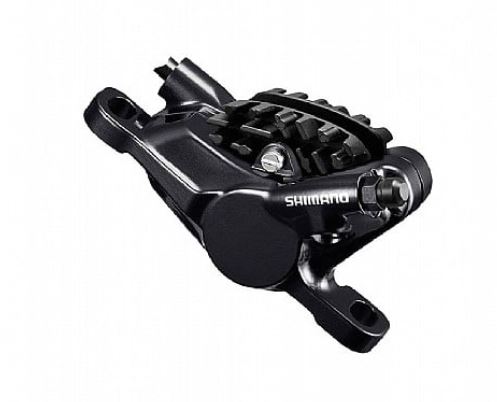
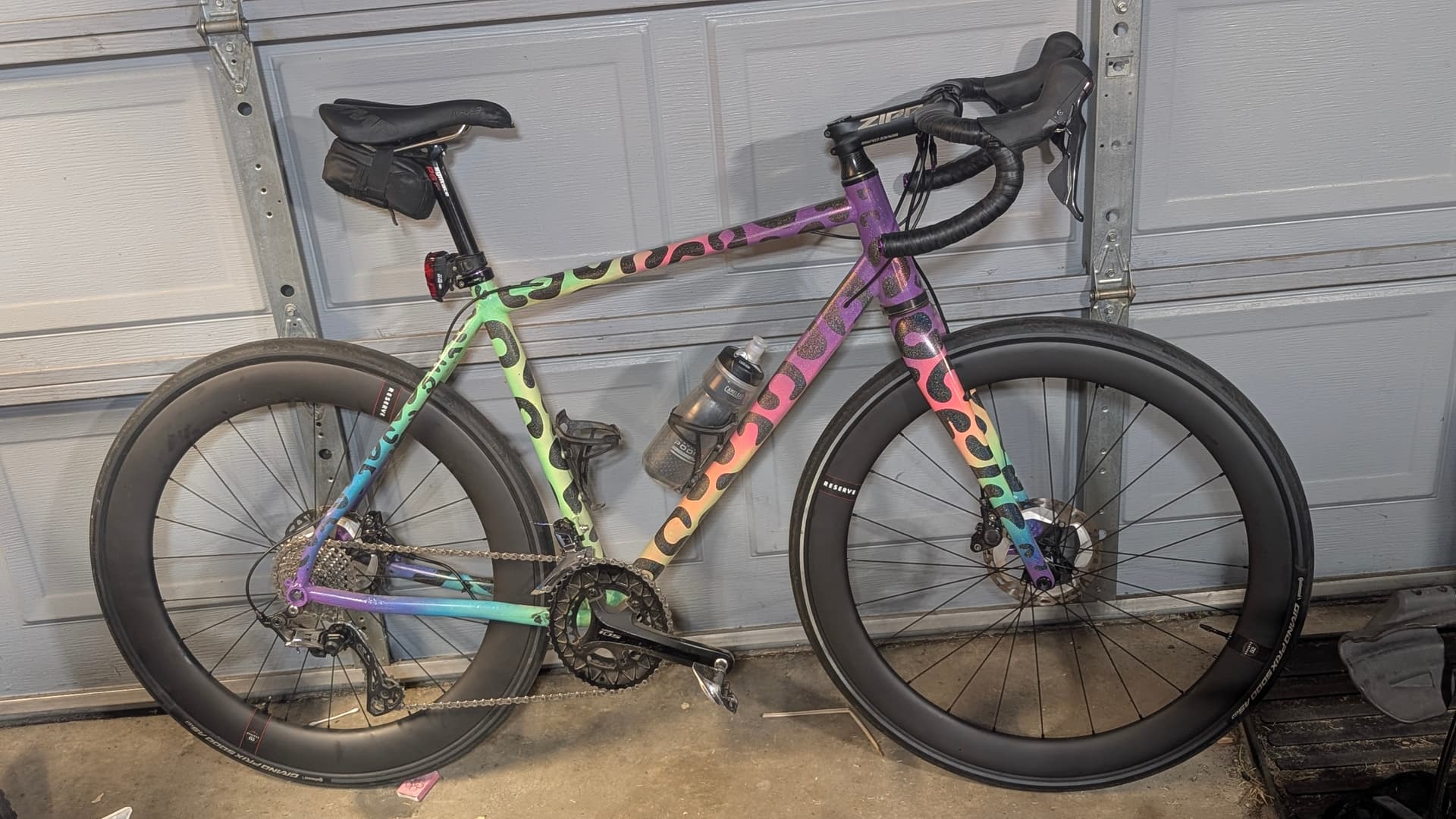
I’m finally upgrading my old first gen hydro 11 speed RS685 road hydro/mechnical shifters to some ebay Ultegra 8020s. My frame/fork are 10 years old and NOT flat mount compatible (even with adatper in the rear). My current calipers are the BR-RS785 “XT/Ultegra” level with straight (not banjo) fitting for BH59 hose to match the spec on the rs685 shifters. I believe the 8020 is intended for BH90, i’m trying to figure out if I must use the BH90 hose with the 785 calipers, or is it best to use BH59? Or am I missing out by not going to a newer 8000 series post mount BH90 native caliper (like xt m8000 post mount with banjo fitting)? Im pretty sure the hoses are phsyically interchangeble, the only differing being the actual hose/barb ID. Does is matter which I use to get the best brake feel/power with my current technically mismatched combo?
Options: #1 - 8020 to 785 calipers with BH90 #2 - 8020 to 785 calipers with BH59 #3 - 8020 to new 8000+ calipers with BH90 (would rather not drop more $ on calipers if i dont have to)
That’s technically not a compatible shift/brake lever to caliper combo. I’d recommend going to the newer flat mount calipers with a post mount to flat mount adapter and running BH-90 hose. Shimano are often conservative in their compatibility charts, but sometimes they have a very good reason for it…
For example, running the new thinner mineral oil from the mountain Ike brakes in older systems is a Certified Bad Idea™️
Unfortunately the post mount on my frame is for 160mm, so the wolf tooth you linked won’t work unless I go to 180mm rotors. I’m a fatass 100kg but that sounds like it would be so big that it could actually lock up accidentally (I use this bike for road mostly with 32c tires). The adapter could work for the fork (enve CX for 140mm native, im currently using a +20mm post mount spacer). For the rear, Looking around I think I need at least 24mm clearance for the post to flat mount adapter which maintains the native 160mm spacing, I have maybe 15mm so it’s not physically possible.
This is why I was asking about going to a post mount XT style caliper to avoid the flat mount compatibility issues
Regarding Shimanos ultra conservative compatibility charts - after overriding their max tooth counts for years now I’m familiar with readily dismissing them hah. That being said, what is the actual risk with the “mismatched” intended hose specs between the 8020 levers and the 785 caliper? Would the 8020 levers not move enough fluid to properly compress the 785 calipers, regardless of hose type?
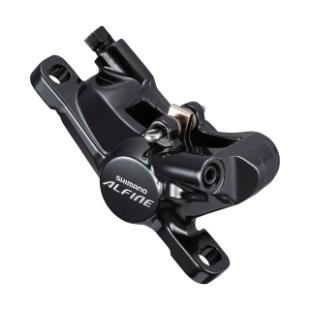
I’ve had this situation before when I needed to replace a knackered RS785 caliper on an older CX bike. I could not source a replacement so went for the Alfine BR-S7000 caliper instead.
It worked perfectly, with BH-90 hose, and the S7000 caliper is significantly easier to bleed than the RS785 one it was replacing.
I’d opt for that Alfine caliper again without hesitation if I ever need to do this job again.
Ah good call, like most I kinda forget Alfine exists. Was there a reason you went with that specific caliper - was it just that it has an inline hose fitting instead of the banjo style for the MTB line (slx/xt) calipers?
Thank you for this confirmation. That was the direction I was headed, but as others have noted technically the calipers aren’t meant for BH90. My assumption is that they would still work, but my fear is loss of absolute power or lack of modulation. Any input on what I could expect with I use my current calipers with the new levers?
Exactly that reason. It is post mount, standard hose connection.
In terms of how it will feels vs your existing set up, I’d be surprised if you really notice any difference as long as you have an effective bleed and bed in process.
Hi Alex, am also in the market for a post mount caliper to match BH90 hoses. I’ve had a look at Shimano’s specs for the BR-S7000 calipers, and it mentions compatibility with BH59 hoses…
In your experience, using the BH90 hoses have had no adverse impact on the caliper’s performance? Planning to match the caliper with an S7000 lever.
Correct, no impact on performance. You could argue using BH90 hose is an upgrade and give better braking performance because the hose ID is smaller and the hose less flexible.
I take the same view as @steve_k, match hose to lever and as 90% of my work is on newer road bikes, I have a 30m reel of BH90 hose sat in my workshop and no BH59 hose.
Had the same question some years ago, went with BH90. My combo is BR-RS785 with ST-R9170 (and BH90 olives and inserts), has been working flawlessly for about 5 years. Can’t really feel the difference to BR-R8070 + ST-R8070 combo.
@WCS_Alex Out of interest how is that S7000 easier to bleed, it looks pretty much identical to RS785?
The S7000 caliper has the separate bleed port and bleed screw (3mm hex) that the newer shimano road calipers have vs the combined bleed port and screw (7mm nut) on the RS785.
Easier to access, the 3mm hex stays in the bleed screw nicely when rotating the bike, different caliper internals, black pistons.
ah, Shimano must have updated the RS-785, my appologies .
It used to look like this and these are the only ones I’ve come across that needed replacing.
Oh right, that would explain why some sources list it with BH59 and some with BH90, didn’t know about that caliper. Could have been logical to rename it to RS786 or something.
Thank you everyone here for your input. I ended up using the BH90 hose and fittings to the BR-RS785 calipers. Only been on a short test ride so far but the brakes work so that’s good, right? The levers seem to have a bit more travel before engagement than I would prefer, but I remember I actually had a similar issue with my original rs685 levers- I think I solved it last time by cheating a bit by bleeding with the pads in the caliper instead of using the brake block. The lever travel issue is honestly probably just my poor bleed technique, but this round of initial set up did seem to go much easier than with the original combo, I didn’t even curse into the void like usual!
For anyone else who stumbles across this thread, I realized the Deore 6100 calipers are post mount, straight hose fitting BH90 - so that might be another more readily available caliper option if you’re trying to keep things as similar and compatible as possible.
I’m loving that wicked paint scheme and the wheel stopper on the front of that rear wheel. Really classy.
Regarding the brake lever travel, it could just be the pad wear. If that’s the case, the travel should sort itself out (and lessen) soon enough. Otherwise, if there’s also a somewhat spongy feel when the pads make contact with the rotors, it could be a sign of excess air in the system, which you’d want to remove by rebleeding the system.
And if you’re the sort that prefers a shorter travel at the brake lever, you could remove the wheel and press the brake lever fully ONCE (never twice at a go), before reinserting the wheel. This causes the levers to push the pistons further out than they would if the wheel was on the bike. If you then decide on an even shorter travel, you just need to redo that last step again.
 Don’t know about internals, pistons are white.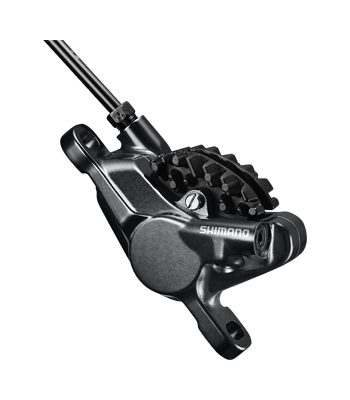
 .
.