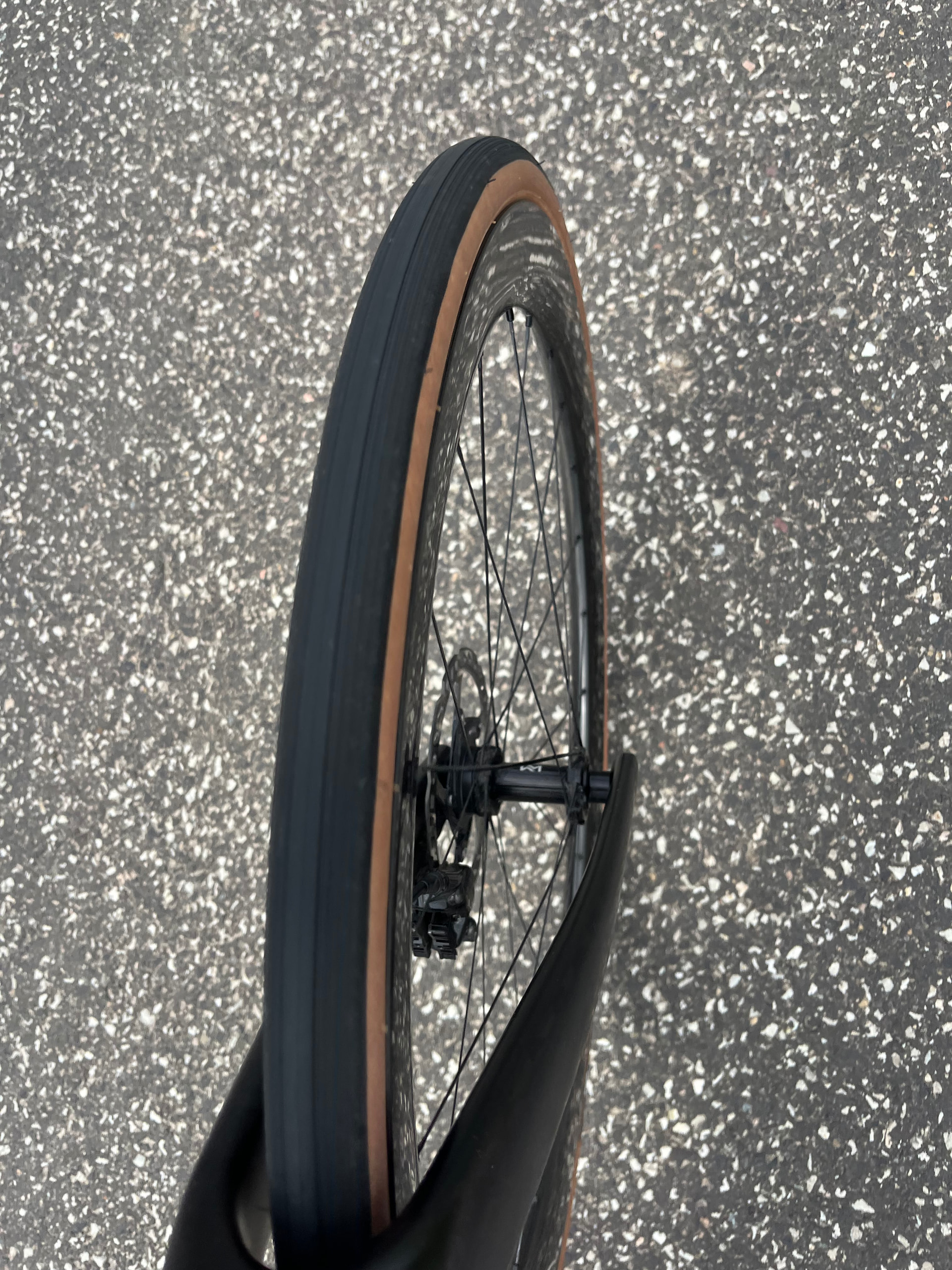
Just listened to Geek Warning from 05/29 and was a little surprised by your reaction to the question about the fatigue of a wheel after 40k km. I’ve done just under 35k on my main set of wheels since 09/23 and would not have thought that they are near the end of what to expect from them. (Duke carbon rims, Newman hubs, steel spokes, clinchers with tubes, about 99% pavement ridden)
How much would you generalize expectations for fatigue on wheels? What does everyone else here think?
I think the response was less about them being near the end of their useful life and more about being glad to have had 40,000km of otherwise problem-free riding out of them.
Without the spoke break I’m sure they’d be fine to carry on, but given that the spoke broke the potential for others to start to break now is higher. Additionally, the other spoke nipples - and even the rim and hub flanges - may not cope with the stresses of the change in tensions (from both the break and from replacing the spoke) and truing to rebuild with that one spoke etc. given the fatigue of that lifespan (if you live where I do, which is not far from Dave, the spoke nipples would have all corroded by now anyway!). Then it becomes a toss up between replacing all of the spokes & nipples and hub and/or rim if necessary, Vs replacing the wheel.
2 Likes
I know absolutely nothing about wheels and spokes, but happened on this post and it got me thinking. Given that broken spokes, and the resultant changes in tension on the remaining spokes, have the capacity to damage the wheel, would it be sensible to periodically retension spokes as a matter of routine? This seems like quite a bit of work, but could be a logical part of maintenance?
I’ve built several thousand wheels so hopefully I know what I’m talking about, but I’d say it’s sensible to periodically check spokes for tension, and wheels for true, but you shouldn’t have to re-tension very often if at all.
Spokes break because of lack of tension, not surplus of tension. Making sure that spokes have enough tension is the way to prevent broken spokes. Right side front wheel spokes and left side rear wheel spokes are the ones that generally get loose, because the amount of tension available to put on them is roughly half of their opposites, thanks to dish. Spokes on a side of a wheel should have as uniform a tension as possible. Putting enough tension on the disc side of a front wheel and the drive side of a rear makes you able to put enough onto the opposite, lower tensioned side. Making sure the tensions on the lower tension side are as uniform as possible insures that no spokes start off with dangerously low spoke tension.
Generally, a well built wheel will last a long long time, barring damage, needing minimal if any truing or retensioning. An out of true wheel has either been damaged or had a spoke loosen. Spokes loosening usually happens because a nipple backs off. The number one defense against this is using sufficient and even tension. A thread locking compound can be an effective secondary defense, but really shouldn’t be necessary.
Good modern rims, particularly carbon ones, are easy to build with plenty of very uniform tension that retensioning and/or truing should be very rarely needed.
3 Likes