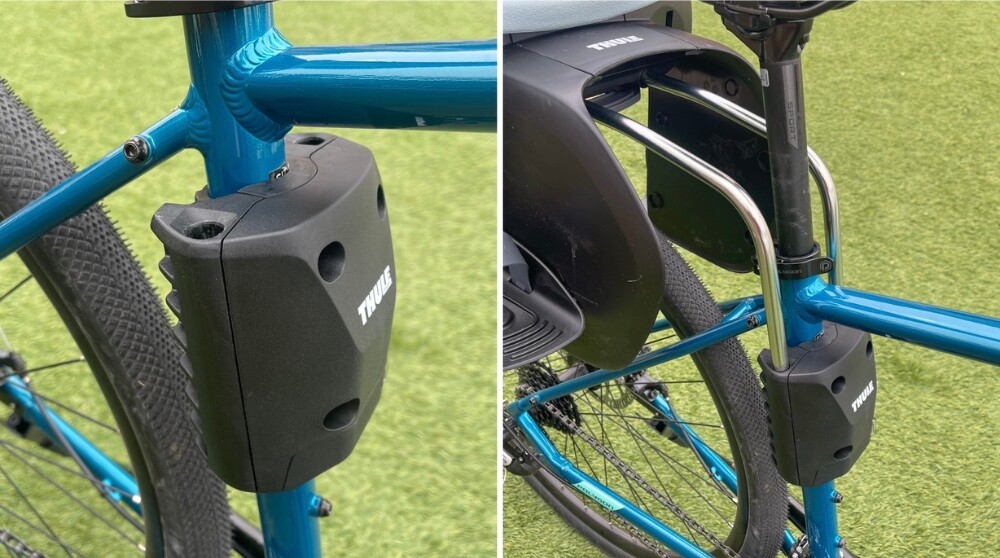
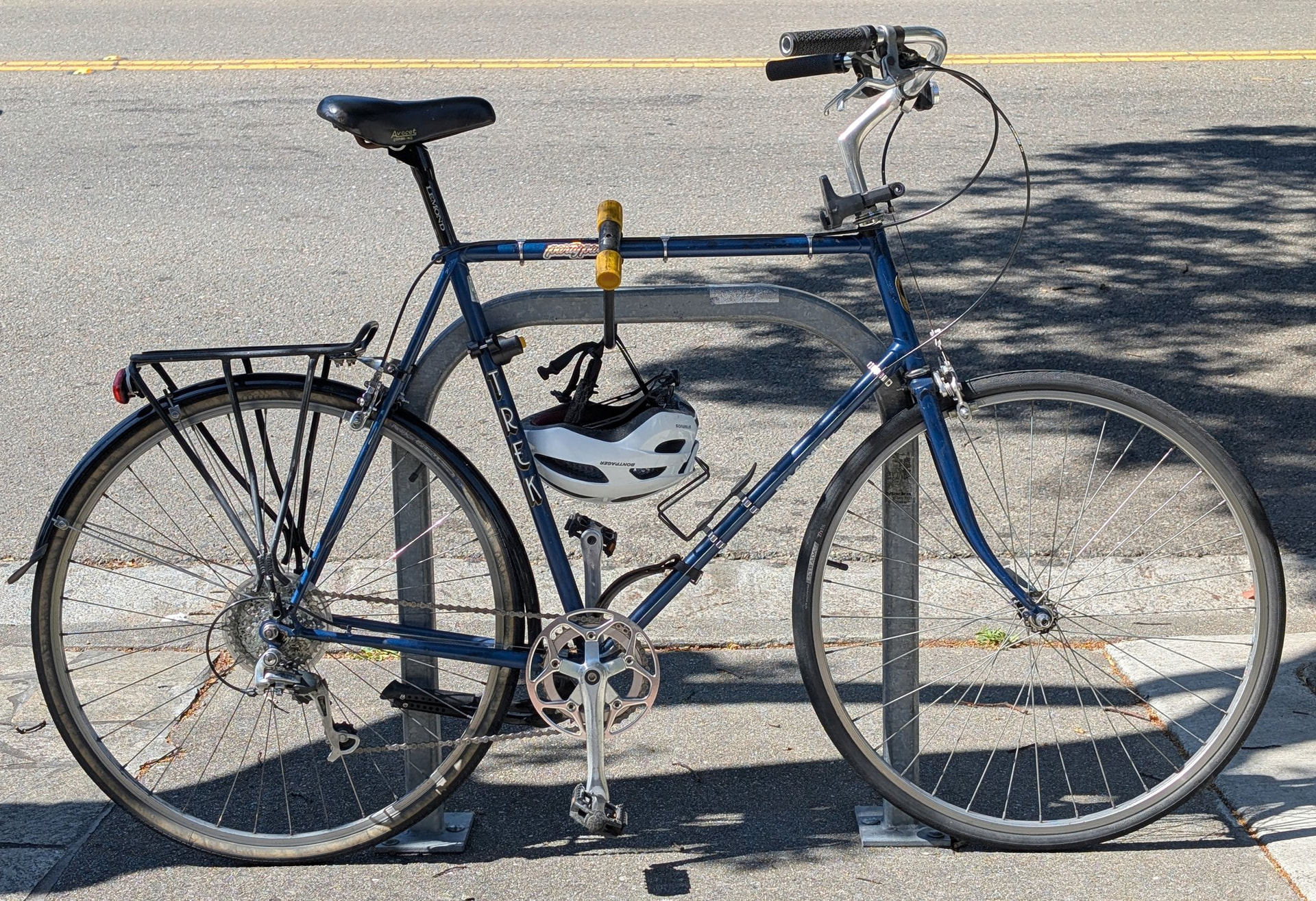
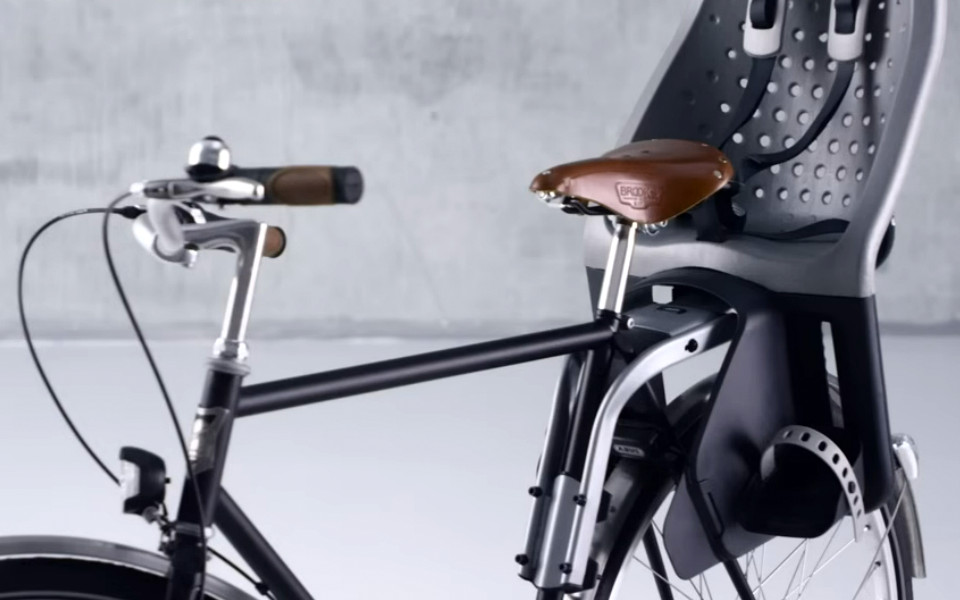
Is there any downside to using this on a traditional-diameter 28.6mm seattube on a tall frame? On my 63cm commute bike, the adapter would attach in the middle of the seattube, somewhere on the TREK decals. Would I have any worry with
a) clamping on the thinner-wall butted area of the seattube
b) clamping further away from the reinforced seatstay/toptube joint
I assume Yepp/Thule thought about this, and 28.6mm has remained common-enough diameter for seat tubes. But horizontal-top-tube frames are rare (the DoLittle front child seat won’t fit on the frame b/c top tube and downtube are too far apart, and it wouldn’t be all that surprising if other child seats hadn’t considered such frames either).
I’ve had one of these on my cube cross race pro 60cm, it’s bent the down tube with my 15kg son. Still using the bike but without the seat now. There is a speed limit on these of 15mph, which I didn’t realise and exceeded quite often, we live on a hill.
Used one of these on an alloy Tricross from specialized for 2 kids/ 4 years. No problems or damage to the bike - the springy attachment rails cushioned a lot of the bounce on our gravel adventures and both kids routinely slept on the smoother roads. I did not know about the speed limit either, I can safely say it does not fall off at double the rated speed and more. Don’t tell my wife. The kids still root for speed.
bent downtube and speed limit are very good reasons for me to avoid this. As much as the Yepp seats are nice (we used a front Yepp Mini for our kid until he was almost 3), I’m going to stick with my secondhand Topeak Babyseat that needs a specific rack to attach.
I had a hamax clamp on the aluminium seat tube of my kinesis cross light for about 5 years, wasn’t an issue and I definitely didn’t stick to a speed limit. The clamp was quite a large contact area to spread the load.
Only reason against a rack one is the impacts are going to transfer through to the seat more than on the ones with long stays which act as a spring.
The seats that attach to the seat tube are loads better than the rack mounted ones. The seat tube mounted have suspension and are attached to a strong bit of the bike. Rack mounted seats mean that your offspring has their life at the mercy of two m5 bolts.
Yeah, the value of the seattube-mount makes sense.
That said, I remain skeptical that frames like mine were considered when seattube attachments were developed, and have yet to hear anything to the contrary. Hopefully they were considered, but if they were, it seems like manufacturers would say something about it.
The seat tube is designed to take your weight. If anything get a nice long seat post inside it to help. Obviously the best thing is a bike designed for carrying a kid. Keep the seat as low as you can get it, and as far forward as you can without anyone being uncomfortable.
As a mechanic in a commuter based store, I’ve seen and installed a lot of kids seats of all kinds. I’ve also serviced many bikes with heavily used kids seats. I’ve only ever seen one frame fail, and that was because someone had installed the mounting hardware over the bottle boss. Don’t do this. That said, you are exceptionally tall, so exceptional things could happen!
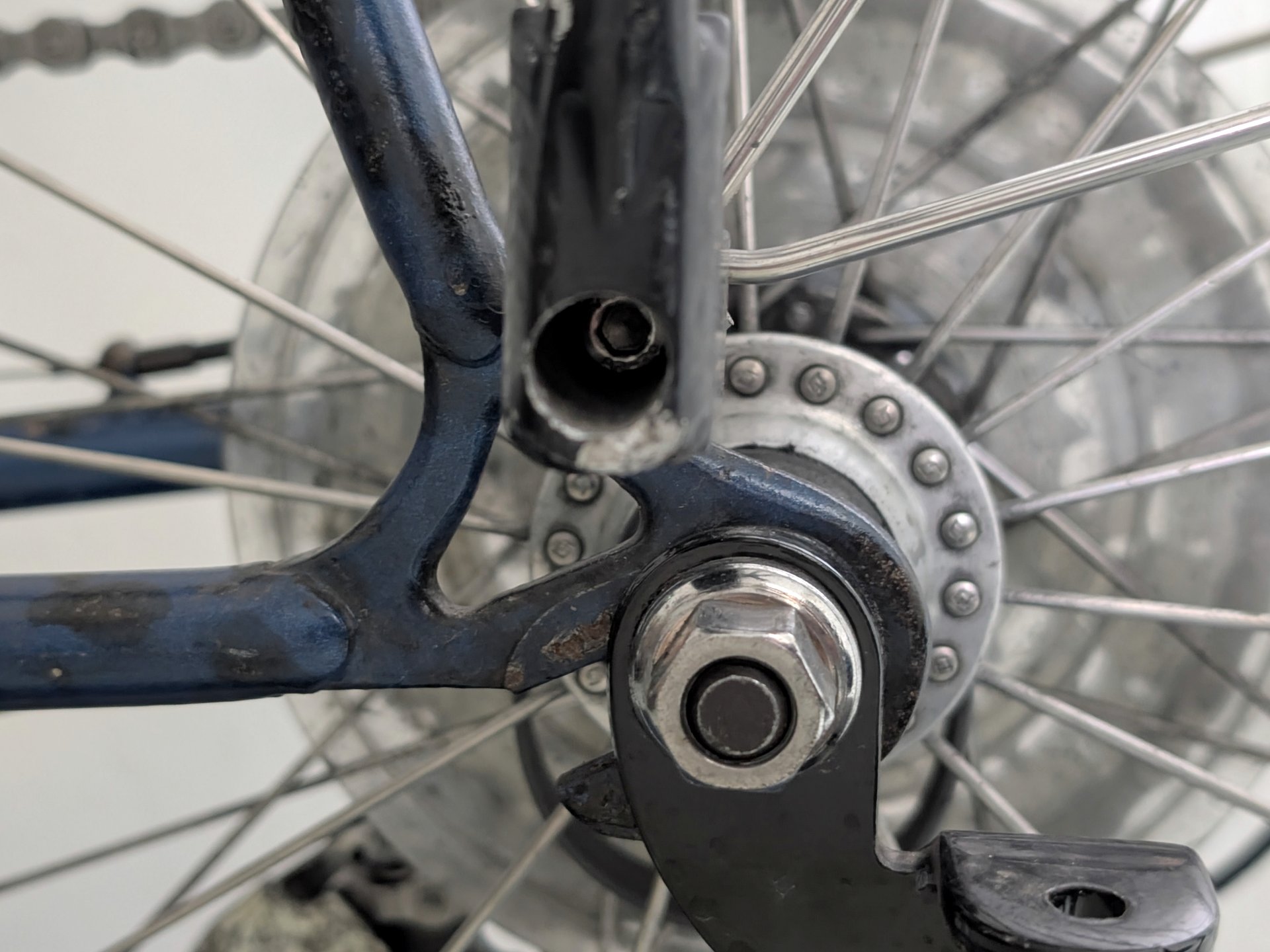
What I can say with certainty is that those Topeak disc racks are absolutely terrible! The way they cantilever the rack upright outward hugely increases the torsion in the bolt. It regularly results in loose and broken bolts. If you’re going to use it, check the bolts regularly and replace them periodically to avoid a possible accident and the annoyance of having to remove the remnants of the bolt from your frame eyelet.
Thanks for the note on the Topeak disc rack. As you might guess, my babyseat (and rack) is secondhand, although the original owner also had a rim-brake bike.Is the long bolts (swooping out from the rear eyelet attachment point) the main mechanism of risk? If so, that would apply to many such rear racks designed for disc clearance. Or is the rack’s bolt-hole too large, allowing excessive play of the bolt within the rack? It’s also possible that the reason isn’t fully clear, but the racks can still be known to have a high failure rate.
Also, thanks for the feedback on the seattube clamping. Sounds like you’d feel fine about the pressure dissipation clamping around 28.6mm-dia steel with 0.6mm wall thickness, and no seattube inside?
And makes sense that the suspension action (flex of the steel rods connecting the seat to the adapter clamp) diminishes the peak forces.
Your right that the problem isn’t exclusive to Topeak. It’s a problem on all those style racks. It’s just super common to see it in Topeak racks where I am because they sell incredibly well.
When Topeak first released these disc racks, they required a long bolt. They redesigned it pretty quickly, I’m guessing probably because of reported failures. It might sightly improve the issue, but it certainly doesn’t fix it. And you can’t obviously see when the recessed bolt snaps off, so people ride longer with broken bolts! They work ok on large flat drop outs where the sticking out bit has a surface to press against. But this style of rack mount/drop out is fairly rare.
Thankfully, you basically never need a disc rack any more because most bikes have the brake caliper on the chain stay, out of the way of the rack mounts. For those bikes with calipers still on the chain stay, you can install hydraulic calipers which require much less spacing out because they don’t have large swinging actuation arms.
I truly wish that Topeak would discontinue disc racks, but I imagine that ignorance on the part of bike shops means they sell pretty well. Oh well.
As for your bike, I think it would probably be fine to mount the Thule seat tube rack. That said, 0.6mm wall thickness is on the thinner side, and the longer size of the tube on your extra large frame will result in less support from the tube junctions as they will be further away. This might actually be a good thing, somewhat like how a butted frame ends up stronger than a straight gauge frame. But I’m not sure, and I’m not going to do an engineering analysis for you unless you pay me
But in all seriousness, if you’re looking for a good solution, Topeak makes a non disc version of that rack which is very reliable. And it’s available without the seat and very reasonably priced. Just make sure the support stays aren’t interfering with your rear brake. But I think with your sweet retro centre pull brakes you should be fine!
Returning here to add some more technical detail coming from a structural engineer: seat tubes carry rider weight mostly through axial compression and some bending (pedaling, etc). Those loads are applied predictably and are accounted for in frame design. Primary failure mechanism would likely be buckling.
Introducing a new bending moment mid tube from a child seat clamp (and associated displacements, causing eccentric loading) makes the tube much more vulnerable to buckling. If there’s a seatpost inside, that section is much stronger in bending. If it’s empty, that would make me nervous.
Thomas, thanks for this info. I’ve confirmed that my rear rack is the later style with a short bolt - need a longish hex wrench to get in there. There’s a bit of extra bolt exposure because of the fender/mudguard stays being mounted between the rack and the eyelet, but the bolts are tight, and the non-drive-side bolt is anchored with a locknut (can’t fit one on the drive-side because would interfere with shifting the chain into the smallest sprocket).
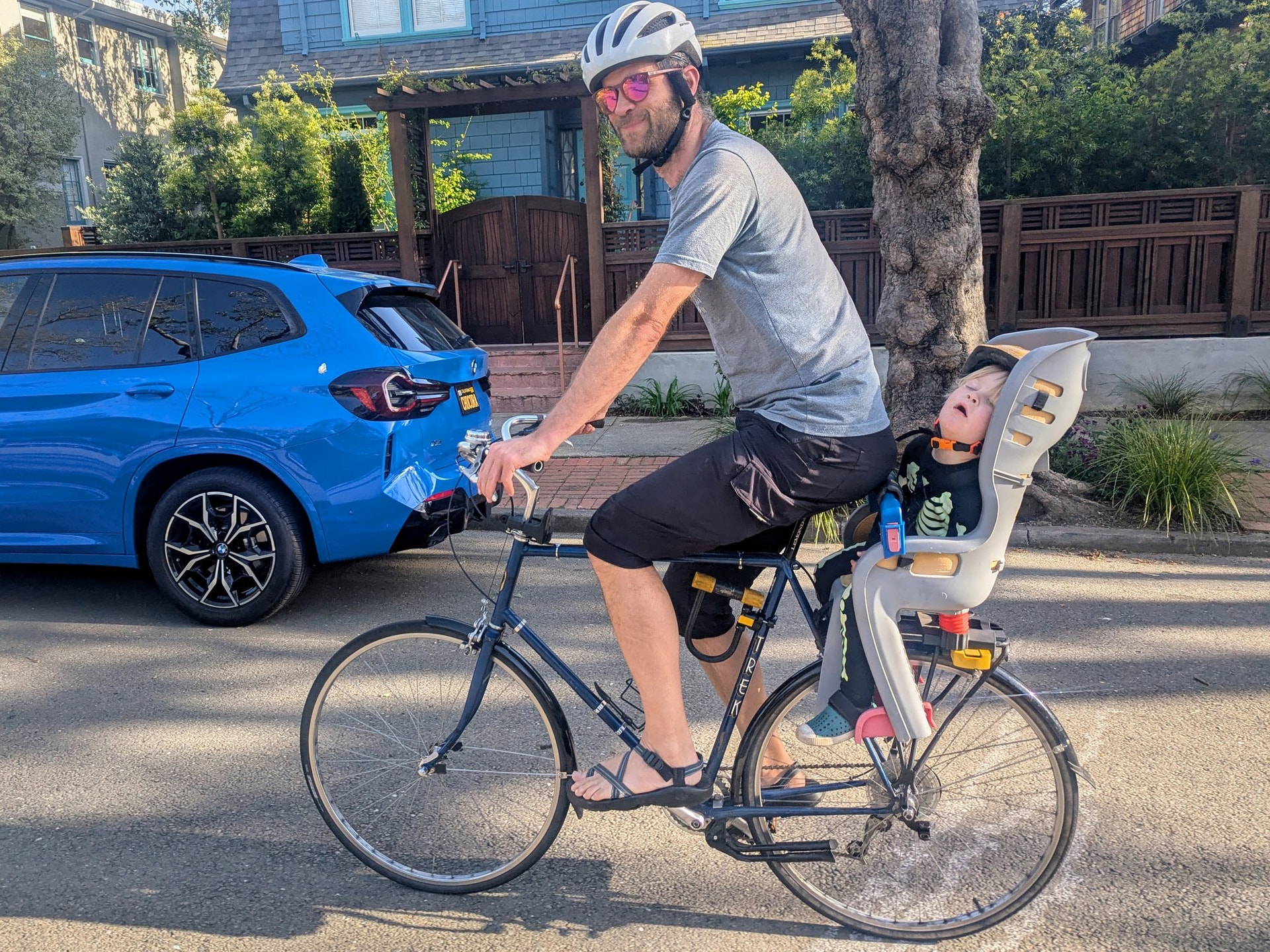
Using a secondhand child-seat/rack, I’ve been careful with setup and connecting the safety strap to the seat tube to add more redundancy.
On the butted seat tube - I’m pretty sure the thinner wall in the middle of the tube is simply less resistant to compressive/clamping force around the seattube, and don’t think it’s one of those cases where the flex of butted center sections (whether spokes or frame) results in a more durable wheel/frame by decreasing peak forces at other spots.
The only official thing I can find that is applicable is Thule’s video for the first-gen frame-mount Yepp rear seat does show a fairly traditional-looking “Dutch” utility bike with a horizontal-ish top tube, and no indication that the seatpost extends all the way to the clamp area. (All of their videos are all basically languageless and just show installation basics.) But I’d also guess that frame doesn’t have a butted seat tube.
Per @Paul_Banks experience with the alloy frame - it’s good to hear about another tall frame (i.e., seatpost probably isn’t reinforcing the clamp area). But I also suspect butted steel is at greater risk than an aluminum seattube, because aluminum will have significantly more wall thickness just to deal with regular frame forces, which puts it at lower risk of clamping force.