My rear hub bearings need replacing. (Discovered when the wheel wouldn’t turn when I swapped to these wheels yesterday for a CX event!)
I managed to get the wheel working for the weekend by removing the bearing seals and forcing some oil and grease into them, but obviously I need to pull them out and replace them.
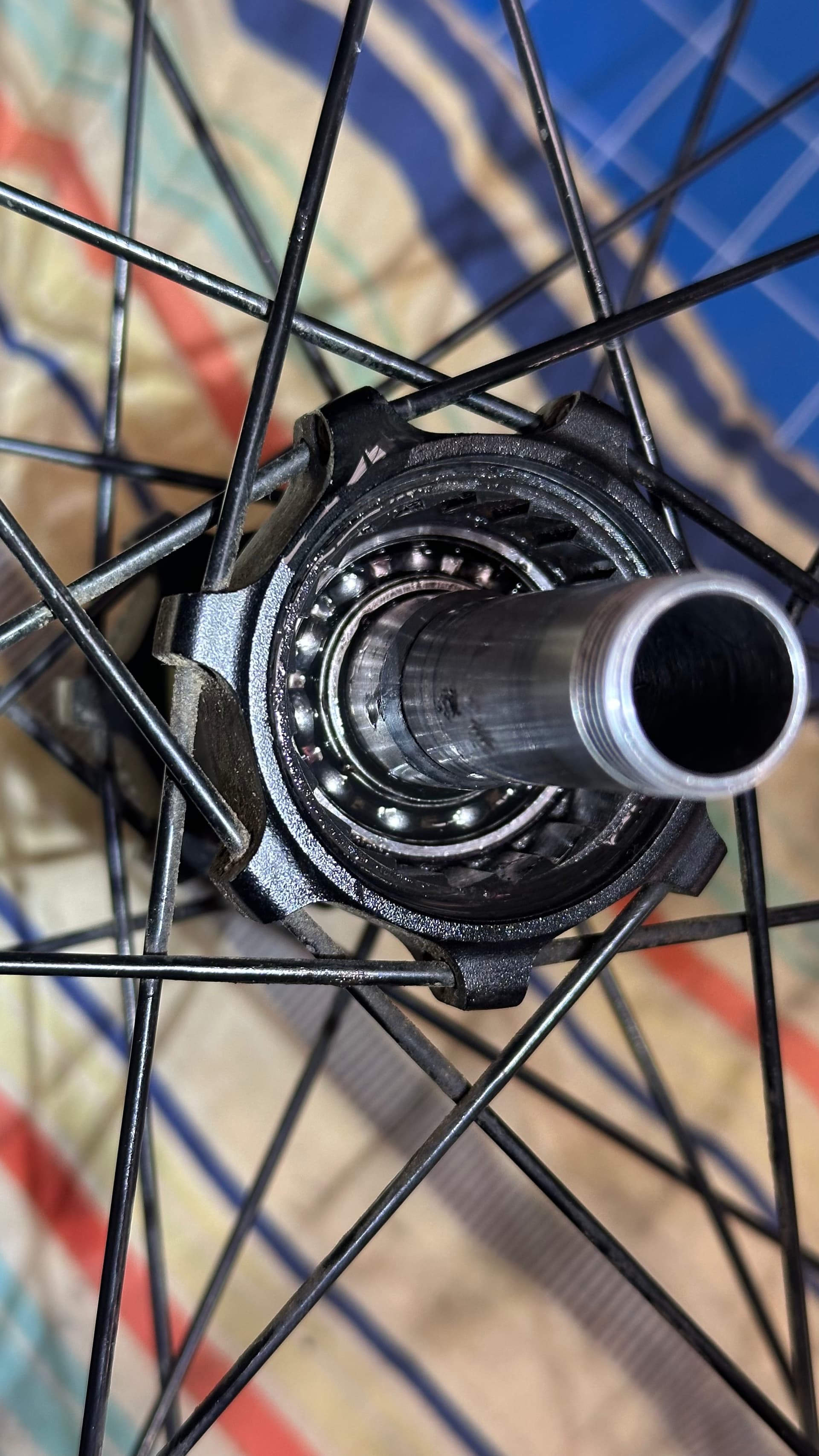
I dug out Dave’s guide for bearing removal but I’m hesitant to start whacking until I know what I’m dealing with. https://escapecollective.co
m/threaded-6-obsessed-with-smoothly-removing-cartridge-bearings/
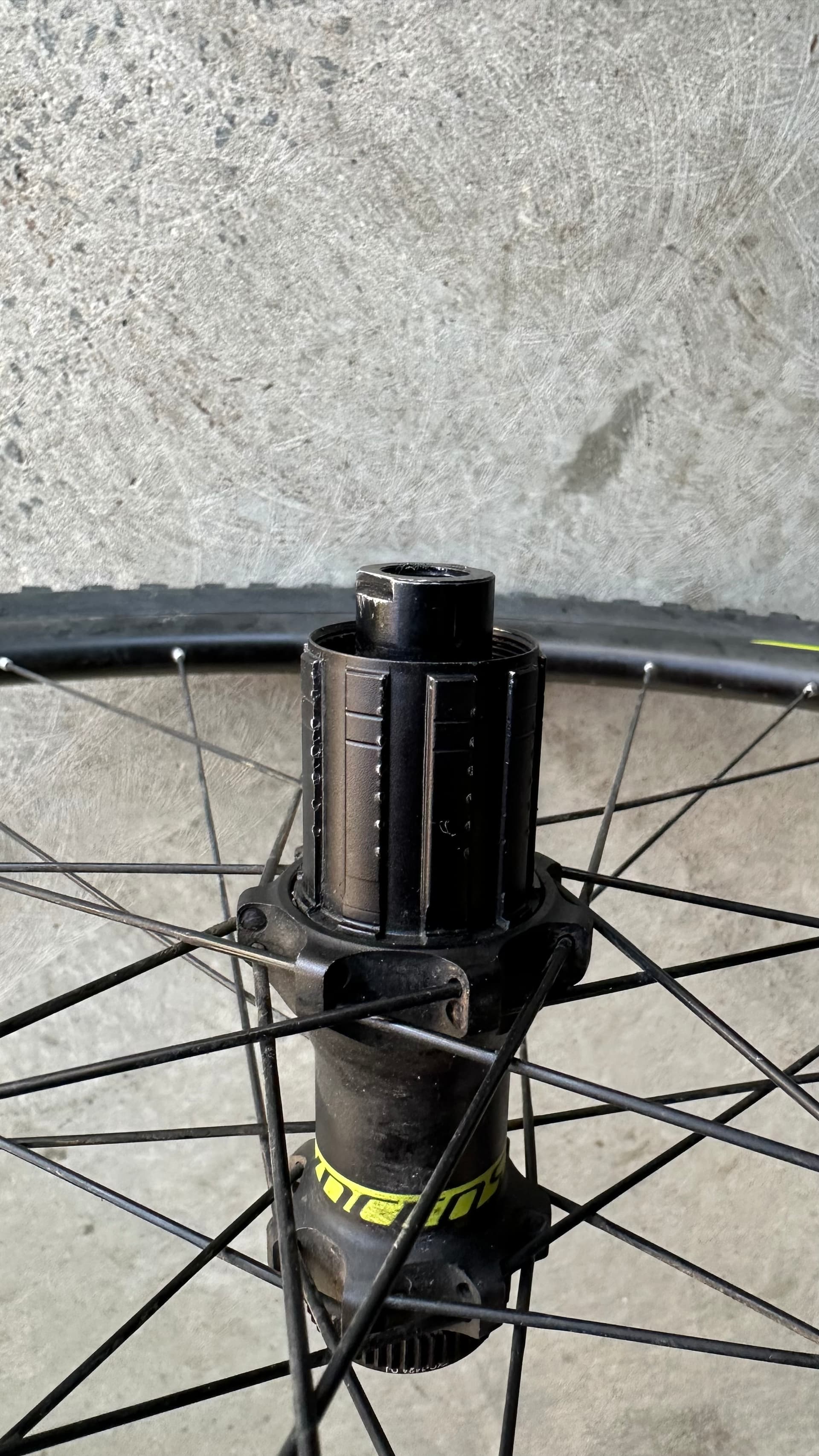
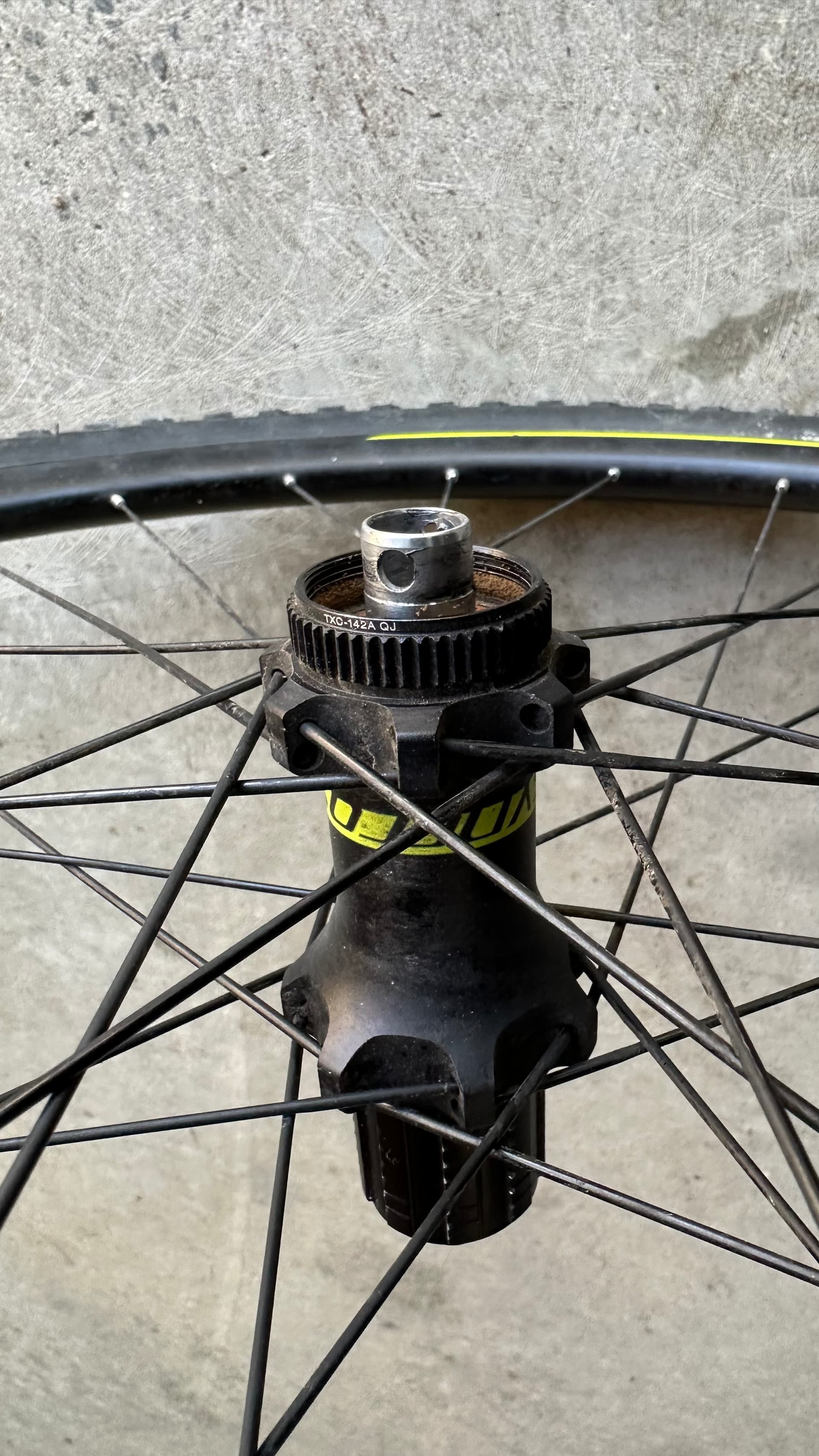
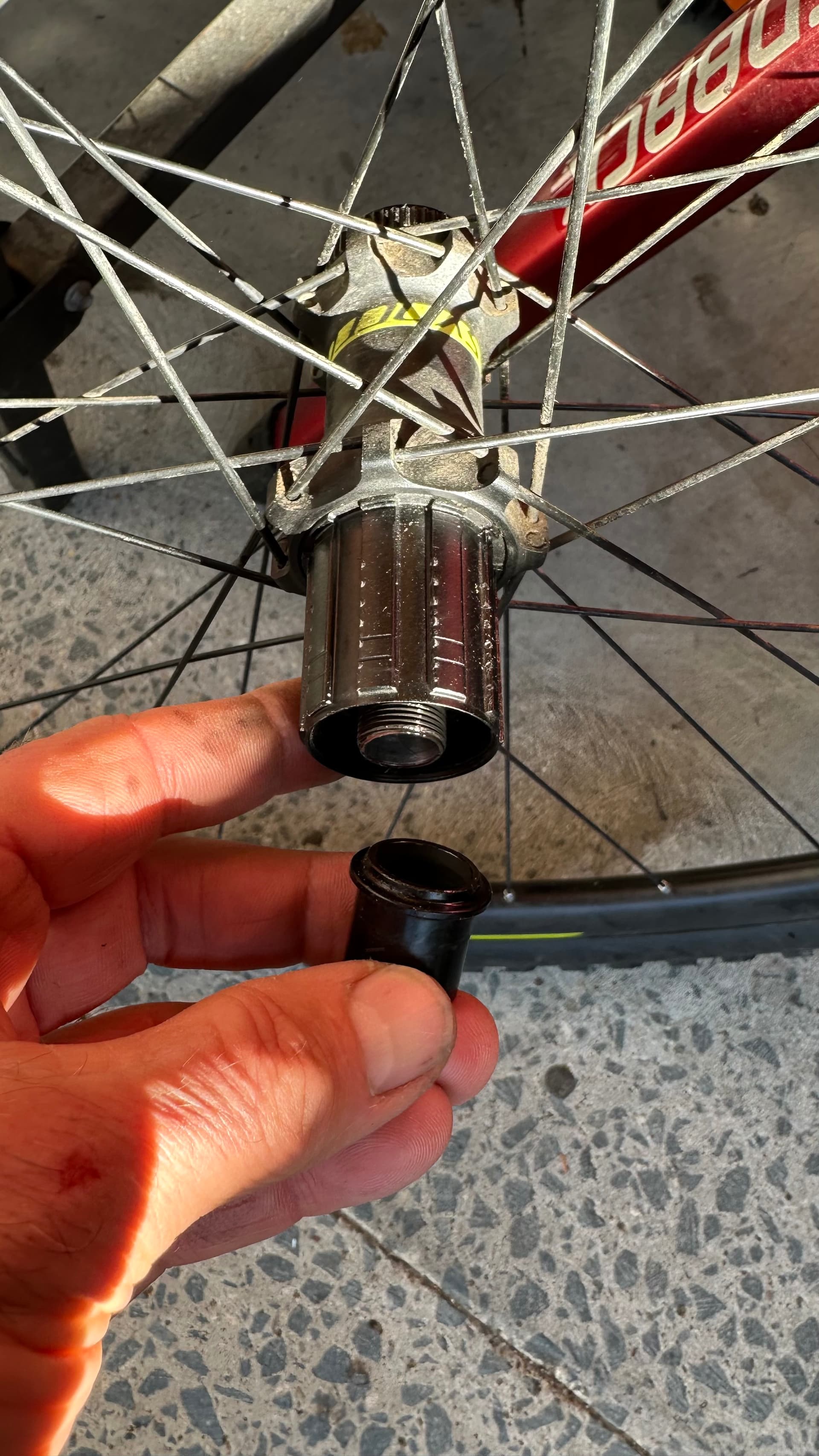
How do I confirm if my syncros rear hub has a captive axle or not?
I know the front wheel is a DT350 copy, having replaced the end caps previously, so hopefully the rear is also a DT350, but I’d rather not guess if I’m hitting things with a hammer!
No surprise that these basic OEM Syncros wheels aren’t on the Wheel Atlas.
An axle that isn’t captive is pretty obvious - you can remove the axle just by pulling it out once you have an end cap off. E.g. in your picture, since you have the drive side end cap + freehub removed, if it’s not captive you’d be able to pull it out or tap it towards the non drive side.
In this case, it looks like a rebranded Formula hub, which from memory would be a captive axle.
Thanks Danny, I’ll try pulling it out just to help confirm your premise.
Thanks for challenging my memory about the hub type - I just realised I was confusing my MTB syncros wheels (which have the DT-type hubs) with these CX wheels.
Pretty sure the axle on that hub will not come out by hand pulling it. One bearing will be fitted, the axle inserted and then the bearing on the other side inserted using over axle drifts.
If you have the tools (bearing press, suitably sized drifts and something to hold the press off the axle on the other side) I’d press the axle and one of the bearings out of the hub.
If you don’t have the tools, use a soft faced hammer to push the axle and one bearing out of the hub. Don’t use a hard faced hammer as you can easily deform the end of the axle and it will then be difficult to fit the end caps and/or the thru-axle.
Crossing the streams with your tool photos, @WCS_Alex , I have 9 hammers hanging on my garage wall, of which I might have bought one and inherited the rest - but I don’t have a soft faced hammer (except for paving mallets)!
I do however have a lot of scraps of wood which I usually use for this purpose, as well as drilling suitable sized holes in blocks of wood for things like supporting the hub while I press / hit the axle out.
I might see if I can bodge up a press for this job, using large bolts + blocks of wood and maybe an appropriately sized socket.
Correction - 10 hammers!
Success. Bearings removed with no hammers required.
I have quite a good collection of presses for BBs etc, including some DIY bodge pipe adapter to clear the longer side of the axle. Both bearings came out easily. Thanks for all your help / encouragement.
I’d always advise trying to press an axel out of a wheel as I fine it is a much more controlled way of removal.
I’ll use parts from various press and removal tools to achieve this and can’t remember the last time I had to use a hammer.
It nearly went very bad when I was trying to remove the freehub bearings. There I was thinking the circlip would make for a straightforward removal. That circlip took 20 mins to remove and then suddenly it jumped over my shoulder into the garage! . I can’t believe I found it. Under the bench behind me.
That still left me unable to remove the bearings, as I don’t have a blind puller, yet, and Dave’s article warned me off trying to push both bearings and the spacer tube out from the other side. So I’ve bailed and asked the LBS to replace the freehub bearings this time and I’m now shopping for the appropriate tool that Dave recommended.
I’ve been there @McCookie, struggling to get a circlip out. I’ve snapped a pair of Park Tool and two pairs of Unior circlip pliers before getting the ones I should have got to begin with from Knipex.
They make the job of circlip removal so much easier.
I’ve the bearing pullers from Nobel (now Abbey), they are not cheap but are very good. The other alternative is from Alt Alt, I think that is the one Dave recommends.
Do your Knippex pliers have a fine enough pin for the freehub circlip holes?? I dunno how a pin that’s thin enough for those holes is supposed to be strong enough to compress the clip! I had to resort to thin screwdrivers.
New circlip pliers are also already on my list as of today.
I got the 16 piece bearing extractor set that @Dave_Rome recommended in his article
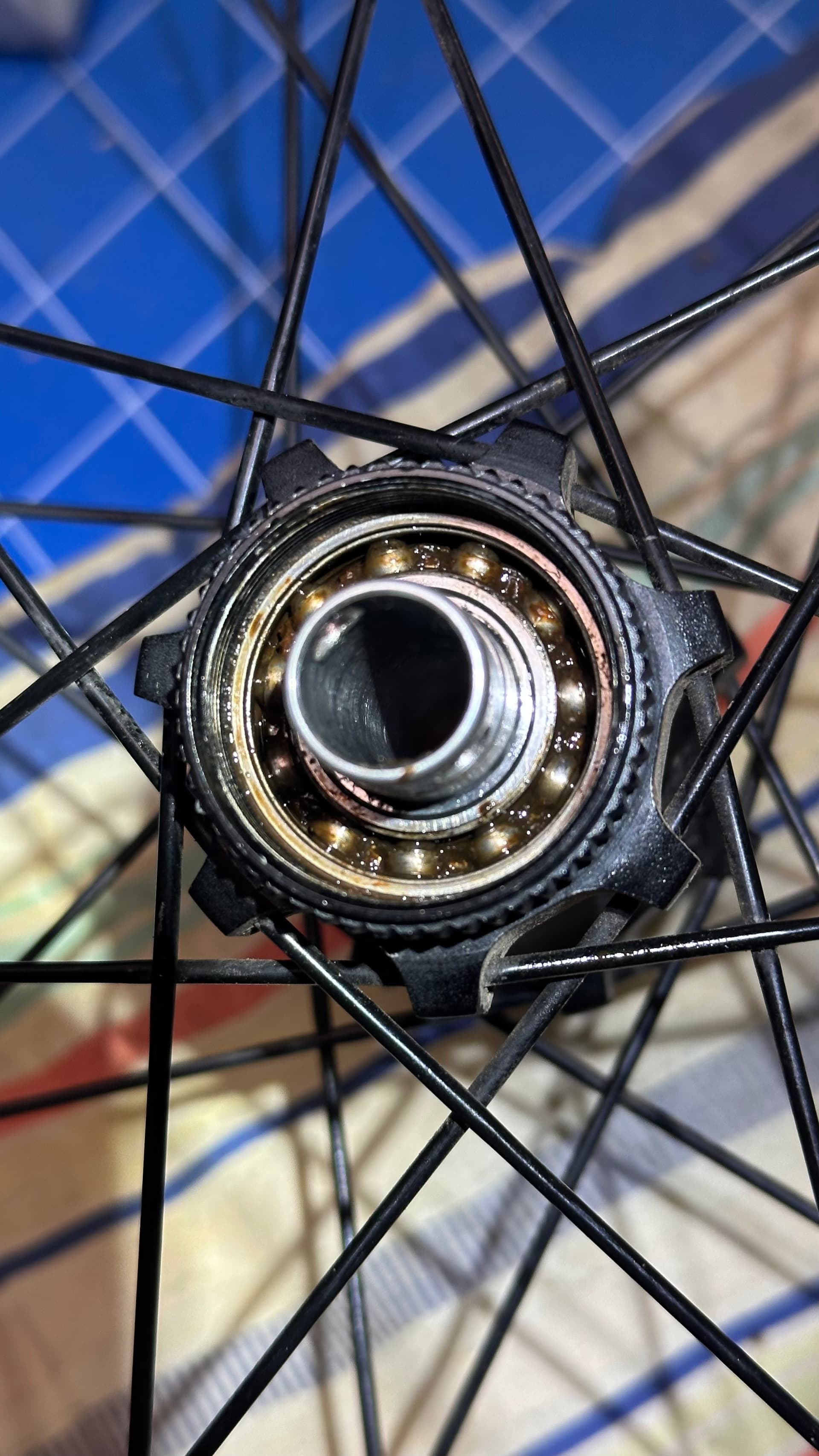
so I could remove the bearings from my freehub only to find that the smaller collets were 10mm and 15.5 mm, while my bearing ID is 15mm. The 10mm just didn’t hold well enough so I had to trim the 15.5mm one until it fitted. That got the bearings out but that’s when I realised what a sh1t design that freehub is, since the internal diameter is reduced for the bearings and increased between them where the spacer tube sits - so I’m not looking forward to getting the inner bearing back in! Obviously I need that Alt Alt kit, but I’ll probably just bodge something.
Anyway, this just got me wondering if people (Dave?) actually bother replacing the bearings in this Formula hub / freeehub? It turns out my LBS usually decline to service Forumula hubs because they’re so hard to get parts for. I reckon I’d do the same if I was charging for my time. I can’t find any support document for the FH-528, just lots of links to Cannondale and Specialised lists of bikes that use that freehub. Formula’s hub drawing just shows it as a part but don’t seem to acknowledge it has bits in it too. I have identified the bearings and know I can buy them but no thanks to Formula for that. Now I’ve got them out, I’m going to try cleaning them out and regreasing them before ordering new ones.
I service, by that I mean replace bearings, in all freehubs I come across where the bearings have failed. Some are significantly easier than others but I’ve only come across one (cannot remember the make or model) where the bearings could not be accessed and removed.
I work on lots of Hunt wheels and changing freehub bearings on them takes me <10 mins.
What you are seeing with the freehub you have, i.e. a smaller ID for the outer bearings → then a wider ID for the spacer → then a thinner ID for the inner bearing, is very common.
I am not surprised your LBS does not do this, many don’t. I had a conversation a while back with a Trek shop mechanic who had seen me replace freehub bearing on one of my Instagram stories/posts. He did not know it was even possible to replace the bearings, they just threw away the old freehub and replaced it with a new one.
I can source good quality stainless freehub bearings for ~£5 each, have the tools and experience, so will always ‘service’ a freehub.
What’s the correct procedure for re-installing the 2nd / outer bearing with the spacer tube in these freehub?
I had assumed the bearing was pressed against the spacer to hold it in place but that always made the bearing rough as soon as it pressed against the spacer.,
I lost count of how many times I had to remove the bearing after pressing it in, because the spacer tube got out of alignment or the bearing was rough when it was pressed too far in. 1/4 of a turn on the press was enough to go from smooth to rough so I had to pull it out again!
I’ve finally got it working acceptably but that means the spacer is slightly loose but at least the bearings are both smooth.
I’ll just need to be careful re-assembling it on the axle, thanks to the loose spacer.
Sadly there’s a high chance that either one of the bearings is damaged, the spacer tube has been flared, or there’s an alignment issue within the freehub.
The spacer tube should compress to be snug, while allowing the bearings to remain smooth. Care is needed to not add too much preload to the bearings with the spacer tube.
Thanks for your optimistic vote of confidence!
Good thing I’ve got new bearings coming!
I did have to sand out the spacer tube with wet & dry after I squashed it.


 . I can’t believe I found it. Under the bench behind me.


