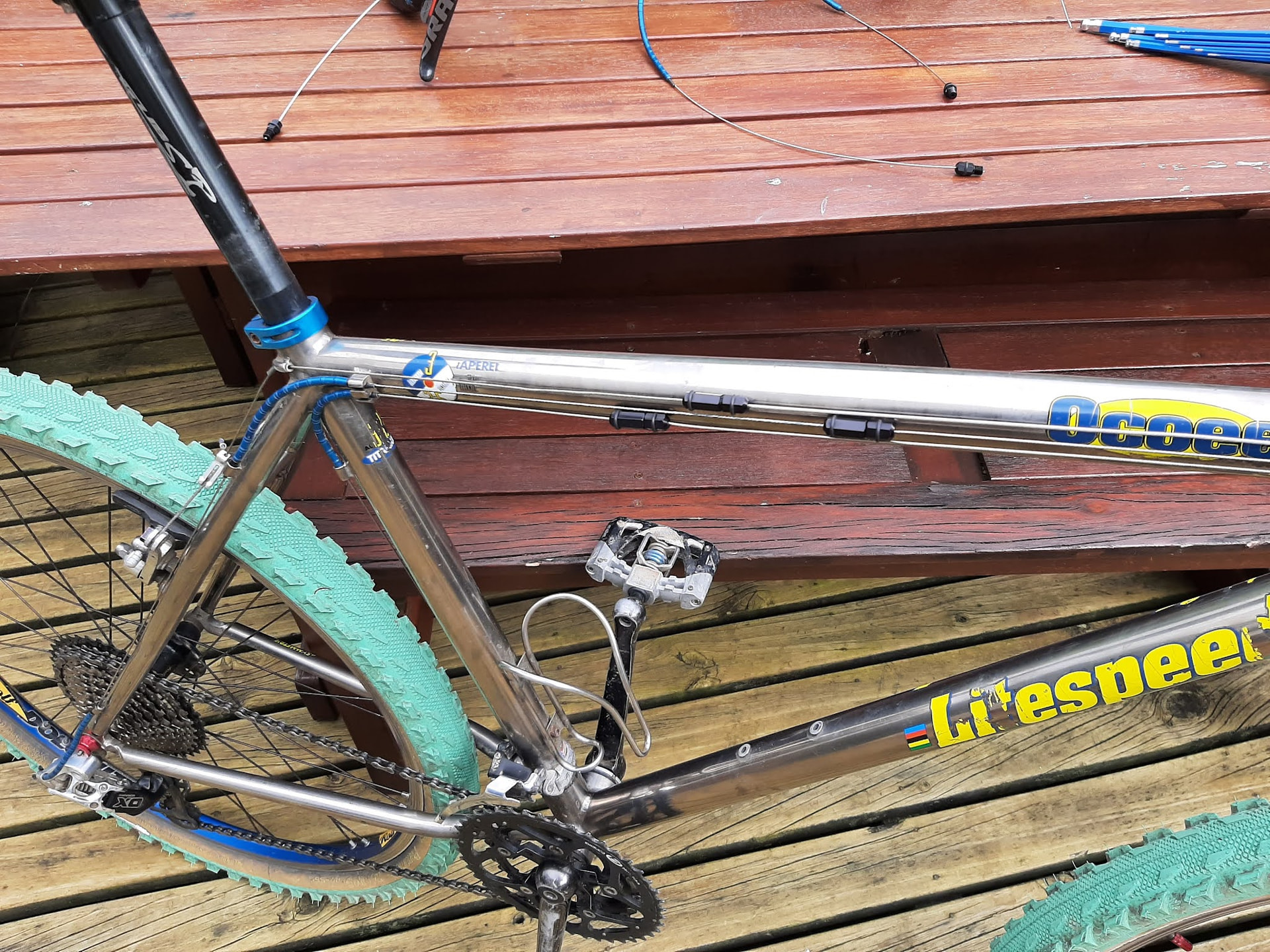
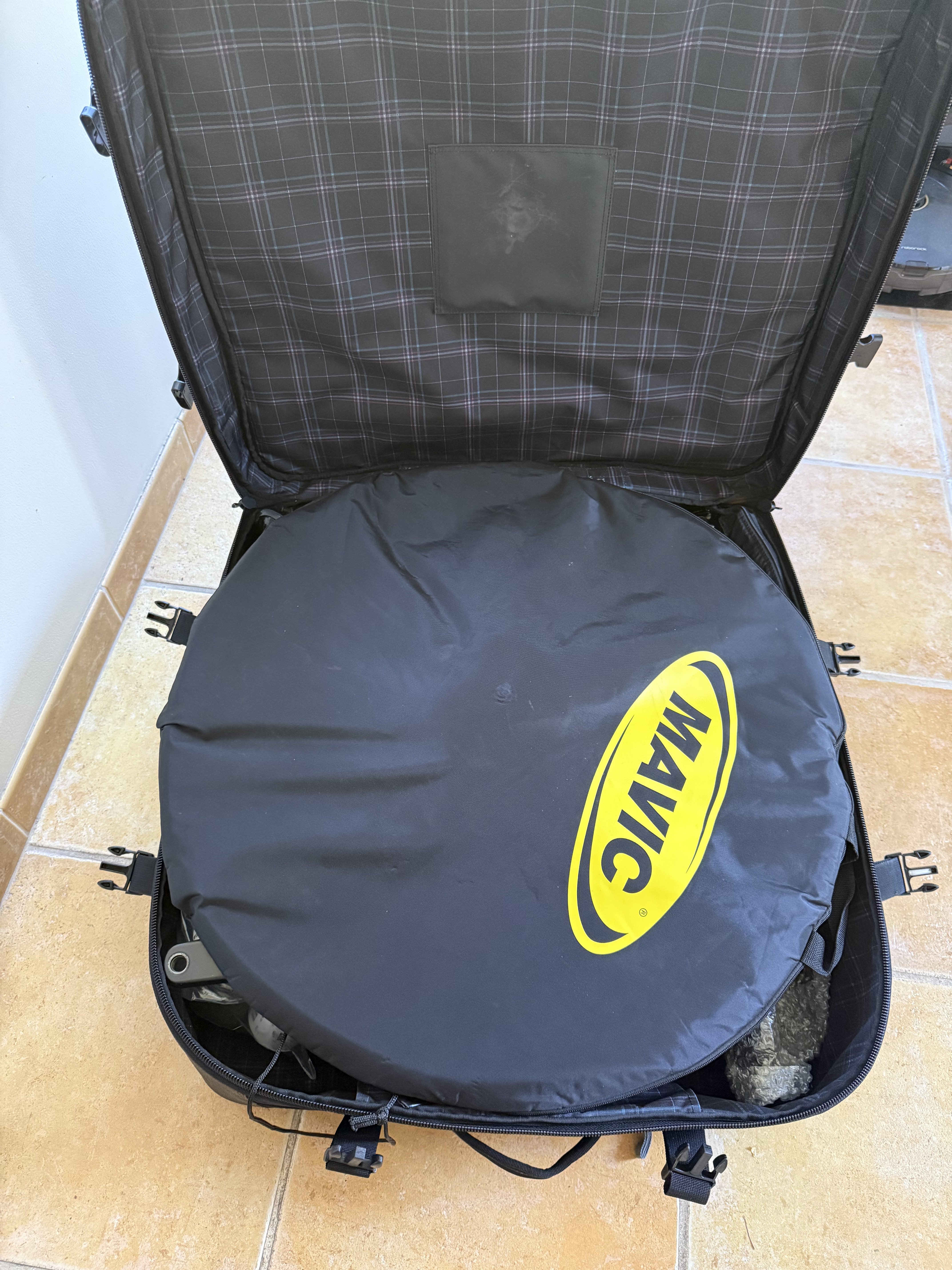
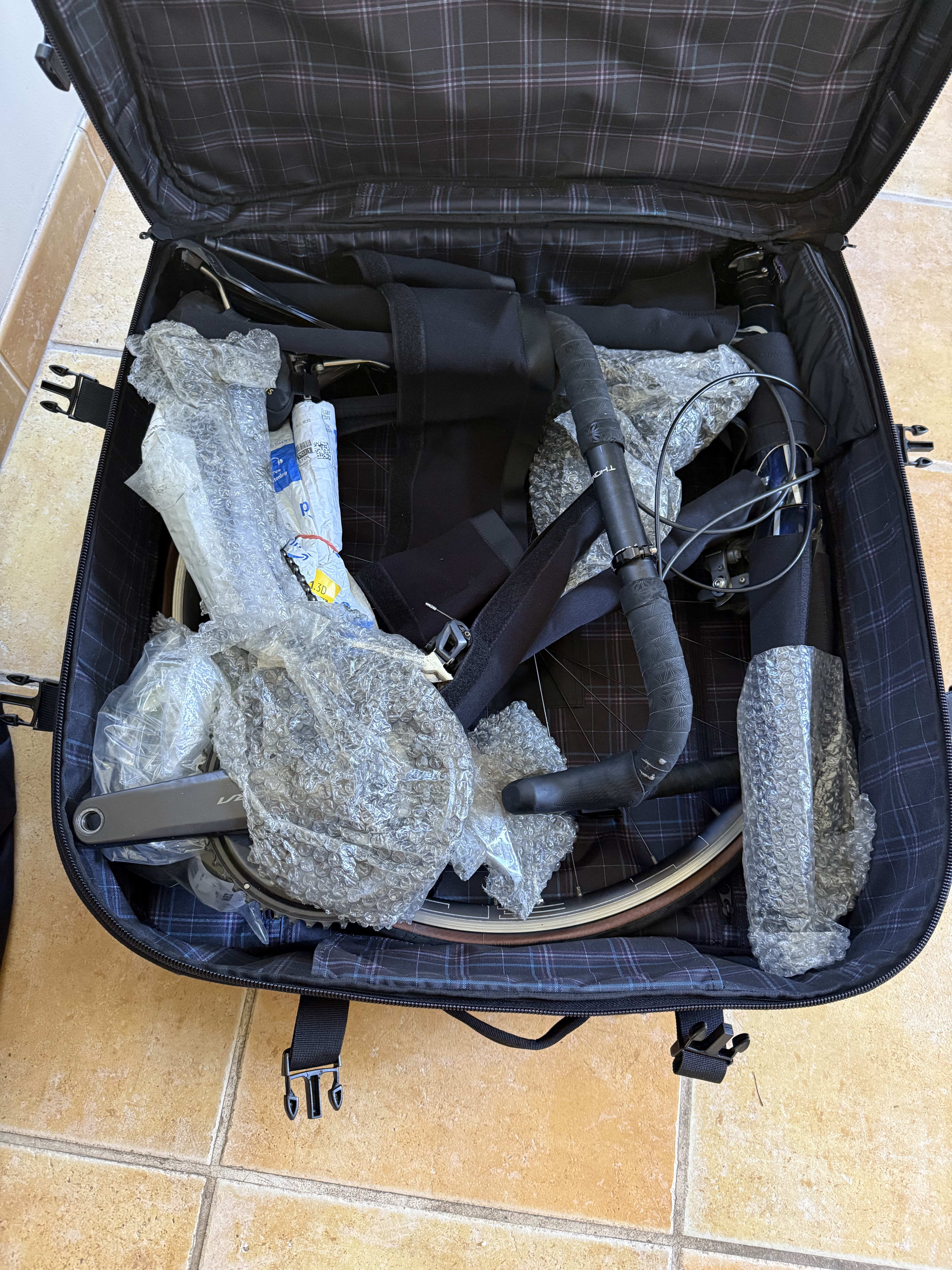
I have a travel bike (Explorateur frame with Ritchey Breakaway system) that’s currently set up with mechanical 11sp ultegra (rim brake). I’ve been considering upgrading to a wireless shifting system to further simplify packing /unpacking and limit the potential for having to adjust the shifting when I arrive somewhere.
It seems like it would be pretty easy to move to 11sp etap - shifters and derailleurs and should be good to go.
But then I started reading about bricked SRAM rear derailleurs, and having second thoughts. And so I looked into 12 sp etap, which is noticeably more expensive, and would then also require swapping the chain and cassette and hub, and so curious to hear what people here think -
how big of a problem is the 11sp SRAM etap rear derailleur? Anyone using wireless on a travel bike? Is it worth it, or should I just still with the mechanical Ultegra?
I have several travel bikes (S&S couplers and paragon z-couplers), some with Di2 some with eTap. SRAM eTap is of course the easiest. There are no wires at all and the rechargeable batteries are small and you can take them on the plane with you. The downside of Di2 is the seatpost battery tends to stay in the seatpost and some countries/airlines are quite strict about no lithium ion rechargeable batteries in packed luggage. Having said that I have never had a problem and you could remove the battery from the seatpost and bring it with you in carry-on luggage if you really had to. For 12 speed Di2 the only wire I unplug is for the rear derailleur. For my 11-speed Shimano bikes I have a two-port di2 junction box in the downtube so I can separate the front from the rear of the bike….and I also unplug and remove the rear derailleur. I have never had an issue with a sram derailleur not working or having issues.
I’ve had wireless groups (11s etap and 12s AXS) on my Ritchey Breakaway for years (and, before that, used it for years with mechanical Shimano groups). I do enjoy having fewer cables to deal with, but one would get more than half of the benefit just by switching to a 1x mechanical system (since the front shift cable is the more difficult one to reconnect).
AXS derailleurs are ubiquitous now, so unless you’re going into the wilderness I wouldn’t worry that much about making the switch to a 12-speed wireless system. I also wouldn’t personally be that concerned about using an 11s etap system if you’re fairly certain it’s working before departure.
P.S., regarding your concerns about needing a new freehub, there’s no need for that. As long as you don’t need a 10-tooth cog, you can buy cassettes from SRAM and other companies that are compatible with XPLR AXS (i.e., an 11-44 cassette) or with AXS Eagle (e.g., an 11-50 cassette) and fit on the Shimano freehub.
I have AXS on my travel bikes and my wife’s, and I wouldn’t want to return to cables ever again. Zeno hose couplers work really well, and between the two systems assembly and disassembly is a breeze, especially with CL hubs. We’ve had multiple trips with these bikes and never a single issue, and I like to remove the hanger and derailleur together so there’s no chance of damage and I’m not fighting a cable (I do remove the chain, our bikes are coupled and it’s easier). Bring along a charging cradle and you don’t even need a spare battery. Yes, AXS isn’t cheap, and you can get by without it, but once you use it traveling and see how easy it is, you will be very satisfied. It’s been on the market long enough it’s easy to find take-off parts, lightly used stuff, etc to ease the pain. Sunrace 12s HG cassettes are remarkably good, so you don’t need an XD freehub body (although many hubs have different freehubs available for swapout, so check on that too).
I’ve had a Ritchey Breakaway Cross for about 10 years now, and recently also wanted to do something similar to you, which is optimize the pack/unpack time. Mine was set up as 1x SRAM Apex mechanical before and I decided to go to 1x SRAM Force 11spd etap to keep the cable-brakes. I love it so far after ~3 trips, it definitely saves nice time on setup, and just is always crisp. FWIW, I’ve also started trying to find as easy-to-install components as possible because I seem to make up time on the packing end of things.
So I’m that guy that removes the crankset, pulls the fork, removes the chain using a master link, etc etc. These days I even pack my handlebars in my small duffel carry-on bag because it doesn’t actually take up that much space but is far easier than the breakaway case!
I think there is no perfect solution. Cables are easier to troubleshoot and even when they are being a PITA the shifting still kind of works and you can limp through a ride.
Wireless is easier to build and tear down and less likely to have issues, but if there are issues you may be fully out of commission.
My travel bike currently has rim brakes and AXS wireless shifting. I really like this setup for convenient travel but ultimately it will be harder to harder to find rim brakes parts and wheels if I need them in a pinch while traveling so eventually I’ll need to figure out a disc brakes travel bike. I’ll probably stick with the AXS because I’m a fan of it.
I have had 11 speed tap on a S &S coupled rim brake bike for going on 3 years now. Zero issues with either derailleur and it’s so simple to travel with.
I also have 12 speed on a Z coupled Ti Allroad disc brake bike which has been equally reliable and easy to travel with.
I would say go with whichever you can afford and meet your riding requirements. The 11 speed cannot receive software updates and the cassette size is limited to 32t unless you go with a Wolf tooth goat link or similar.
I dont have a breakaway bike, but I do swap from flat to drop bars on my mtb, using DaVinci cable splitters, regularly. Its super quick. All analog of course. Brakes and gears. If had one of those new Ritchey breakaways I’d do the same with Growtac stuff. Shifting cant be out and cable brakes.
Good to know about the Sunrace cassettes - thanks for the tip! Interesting that you remove the hanger as well - I just recently broke one, but I hadn’t taken the derailleur off, so kind of felt like it was my own fault for being lazy about it…
Thanks for the reply! Curios as to why you strip everything down?
I use a co-motion co-pilot case with a 58-ish cm frame, and I don’t have to remove anything really except the seatpost, handlebar from the stem (cables remain connected) and the rear brake from the frame (cable again remains connected), plus of course bottle cages and computer mount.
Fork and everything else remain in place, and then it fits pretty neatly with the front wheel at the bottom, the frames halves slightly overlapping on top, and the back wheel - in a wheel bag - on top of that.
And then the case still has plenty of space for clothes, shoes, water bottles, tools, etc - (everything except for the helmet).
The case is still a standard checked bag and easy to fit in a European train or the back of a car. Is the Ritchey case that much smaller? Or maybe that much more padding, etc?
Wow, maybe the breakaway case is just enough thinner that I always struggle with the puzzle. It’s not that things can’t fit, it’s just that removing bolts are a lot less frustrating? Or perhaps the difference between road & cantilever brakes? It’s not like the breakaway case offers that much more padding either, certainly not that much more than two wheel bags. Still plenty of room for extra clothes, tools, bottles in all the nooks and crannies.
IME mechanical shifting is dead reliable if setup properly and not abused, and cable splitters (from Ritchry, etc) take only a few seconds to operate. On the plus side, mechanical is usually lighter and cheaper, there are no batteries to charge, no electrical items to fail, and so forth. I’ve had mechanical STI work perfectly well for years at a time, and see that as being the norm…