Hi,
I am having an issue with my dt swiss pr1400 dicut aluminum rim brake rear wheel. Pretty sure it’s a 240 ratchet hub.
A couple of weeks ago I dropped the wheel in to get the bearings changed, one of the hub bearings was slightly rough, and one of the free hub bearings was quite rough but not noticeable while riding.
There was a bit of a mess with bearings not arriving in the bike shop and eventually he used a different brand of bearings than he usually does due to availability.
On the second ride at ~60km the bearing collapsed. After pulling off the end cap the bearing seal fell out with it, and you could see the bearing race was damaged.
I dropped the wheel back and he reckoned it was the bearings as he’d never used them before, he then replaced them again with industrial bearings.
I’m now in France for the tour, and at least one of the bearings has collapsed again I’m pretty sure, it was on and off creaking for the last week and just coming down off Ventoux it got really rough. I’ve about 315km total done since getting the wheel back, some big climbs over here which shouldn’t really affect anything.
Im a car mechanic by trade, and normally do all my own work on the bike but was extremely busy at the time and dropped it into the bike shop to free up some time. Is there anything common that can go wrong when changing bearings in these hubs? I’m tempted to just cut my losses and change bearings myself again, but if the hub is damaged I want to make sure I’m not blamed for the damage. Just if anyone has experience and is it just a case of poorly installed bearings damaging them while installing or if there is some catch to these hubs.
Sorry for the lengthy post just want to get details correct.
I don’t have any specific advice but if you could share some images in here that would probably help others see if there’s any damage of note.
1 Like
Yes, would like to see pics. I haven’t had a failure that quick on any hub. I have used non-DT bearings on DT hubs, but always installed with DT tools.
1 Like
Something doesn’t sound right here. My guess is the install of the bearings for them to fail that quickly but like anything, you can get sealed bearings that are out of specification and fail quicly.
Saying that, I can only recall two examples of premature bearing failure in the 100s of bearings I’ve fitted over many years.
I suspect both those bearings either had no grease in them or the seals failed. My supplier, Kinetic Bike Bearings in the UK, provided me with replacements without any hesitation.
How many kms have you ridden on the wheels with the origional bearings before they failed?
Are you riding in wet weather?
How good a fit are the end caps?
1 Like
I’m still in France making my way back towards the ferry so haven’t actually pulled it apart yet. Will do asap and take some photos. The first time they failed after 60km on the non drive side bearing you could literally see bits of the bearing carrier sticking out.
Id estimate between 6-8000km done on them before the bearings got a little rough and yes plenty of wet riding as I’m from Ireland. Our roads can be full of grit and salt in winter time so it’s a tough place for a bicycle to live.
I’m told they pressed the bearings in, if I had to guess my thoughts would be they pressed the inner race rather than outer or something of the sorts. End caps seem to be a good fit but something I’ll double check.
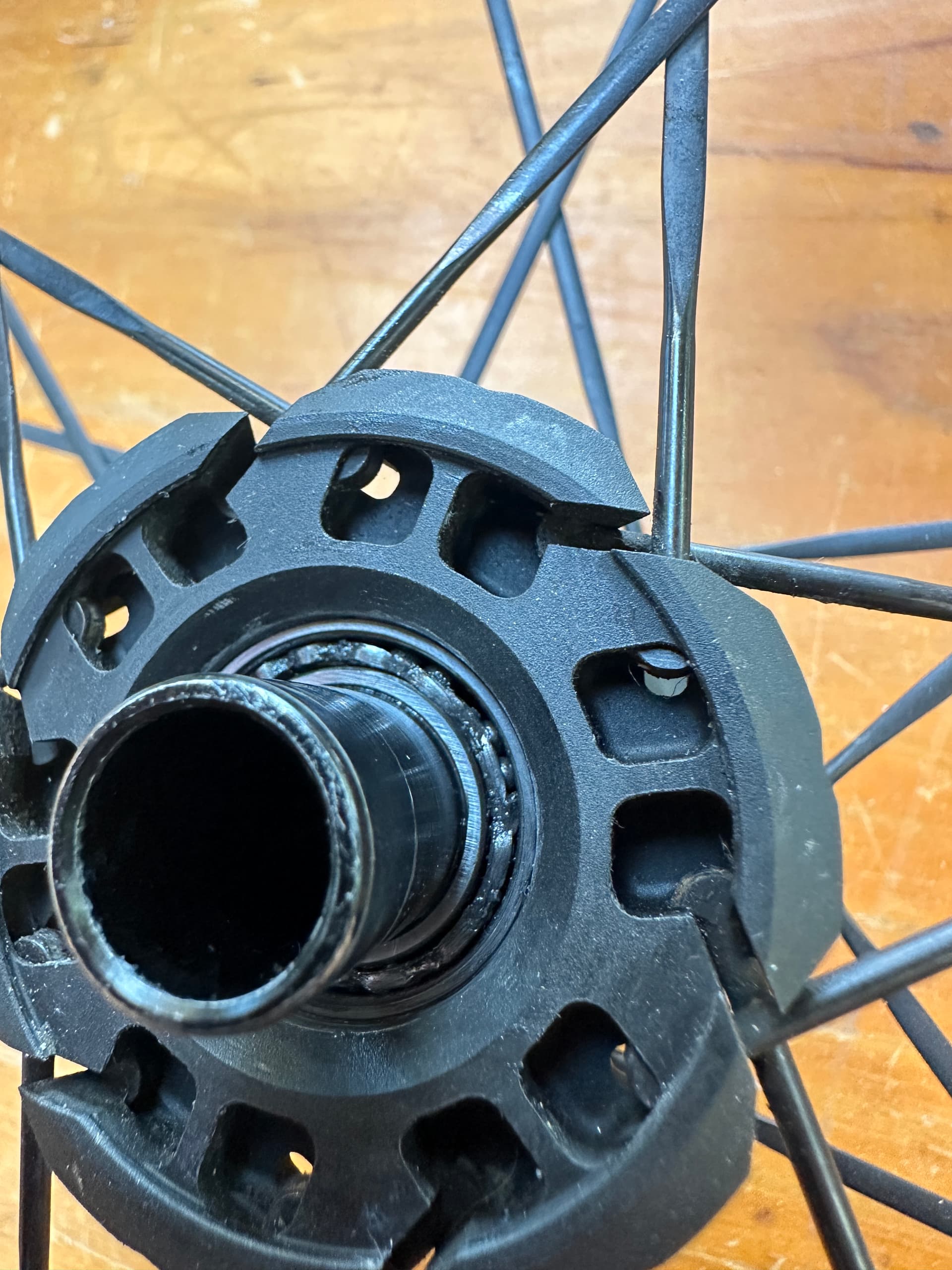
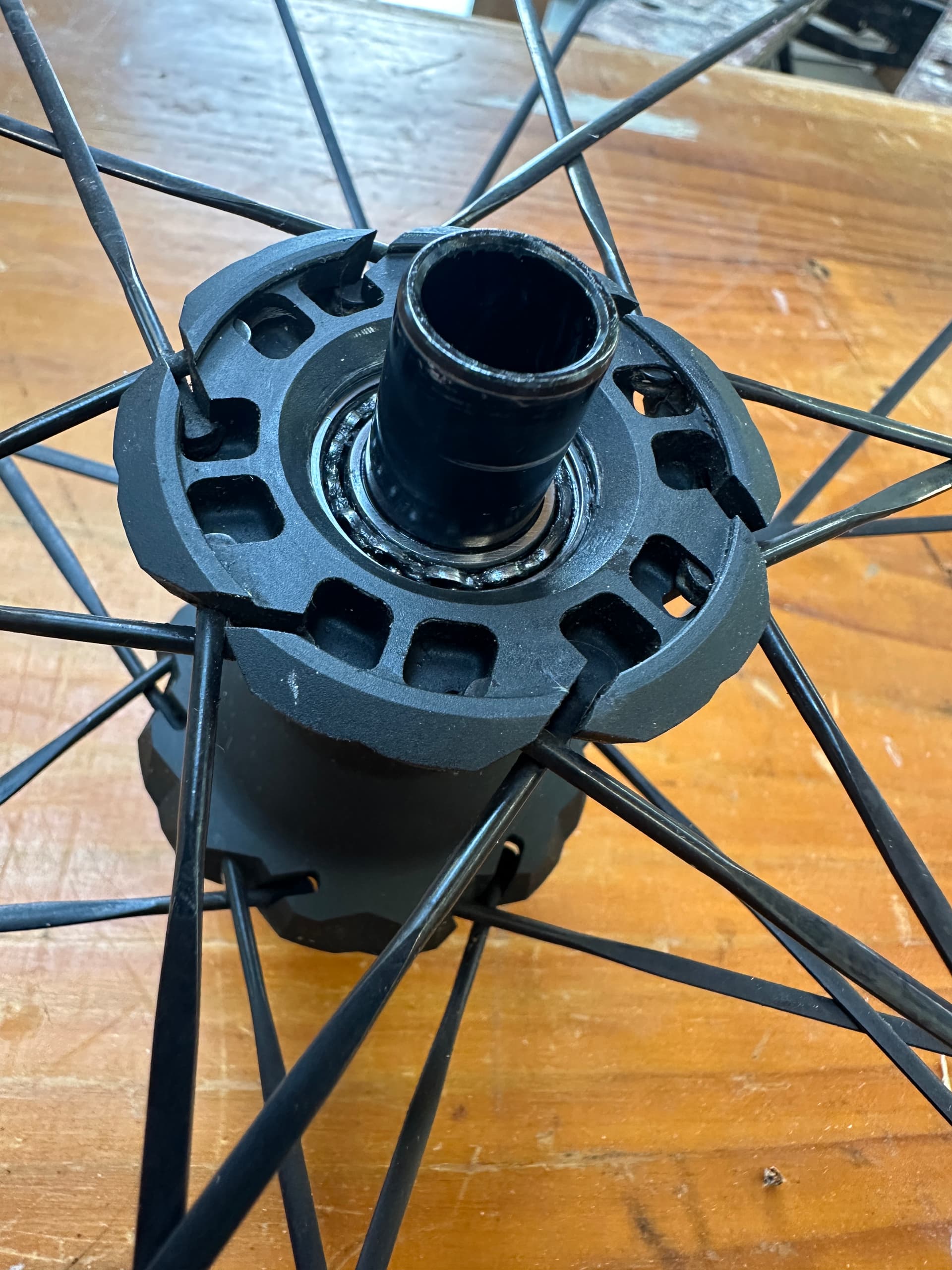
Hard to see perfectly, but after pulling off cassette and end caps, all which felt nice and tight, the non-driveside bearing seal was sitting slightly proud, not seated correctly. After removing the seal you can just make out the the ball bearing cage is sitting proud, also you should be able to just make out that two of the balls are quiet close together with the next ball to the left a nice distance away.
There is some axial play in the axle. I can get it to move maybe 0.5-1mm, it doesn’t look like the bearings are moving just the axle. So I’m guessing the bearings just weren’t pressed fully home maybe and the axial play lead to the non drive side bearing giving up the ghost? It still seems quiet quick to give up even if installed correctly 
Sounds to me like the bearings were not installed correctly (there should be no play) or, if the bearings had one contact seal and one non-contact seals, installed the wrong way around (typically black seal facing inside).
If you have the option, I’d be trying a different shop or a reputable independent mechanic.
Thanks for the reply.
I’m inclined to think that it was an installation issue also.
I will install a new set of bearings myself, I generally would have done myself just was trying to free up time.
Unfortunately it seems to be antoher shop/mechanic to rule out and it seems there aren’t many reputable to me locally as ive had an issue with anyone I have had to go to.
1 Like