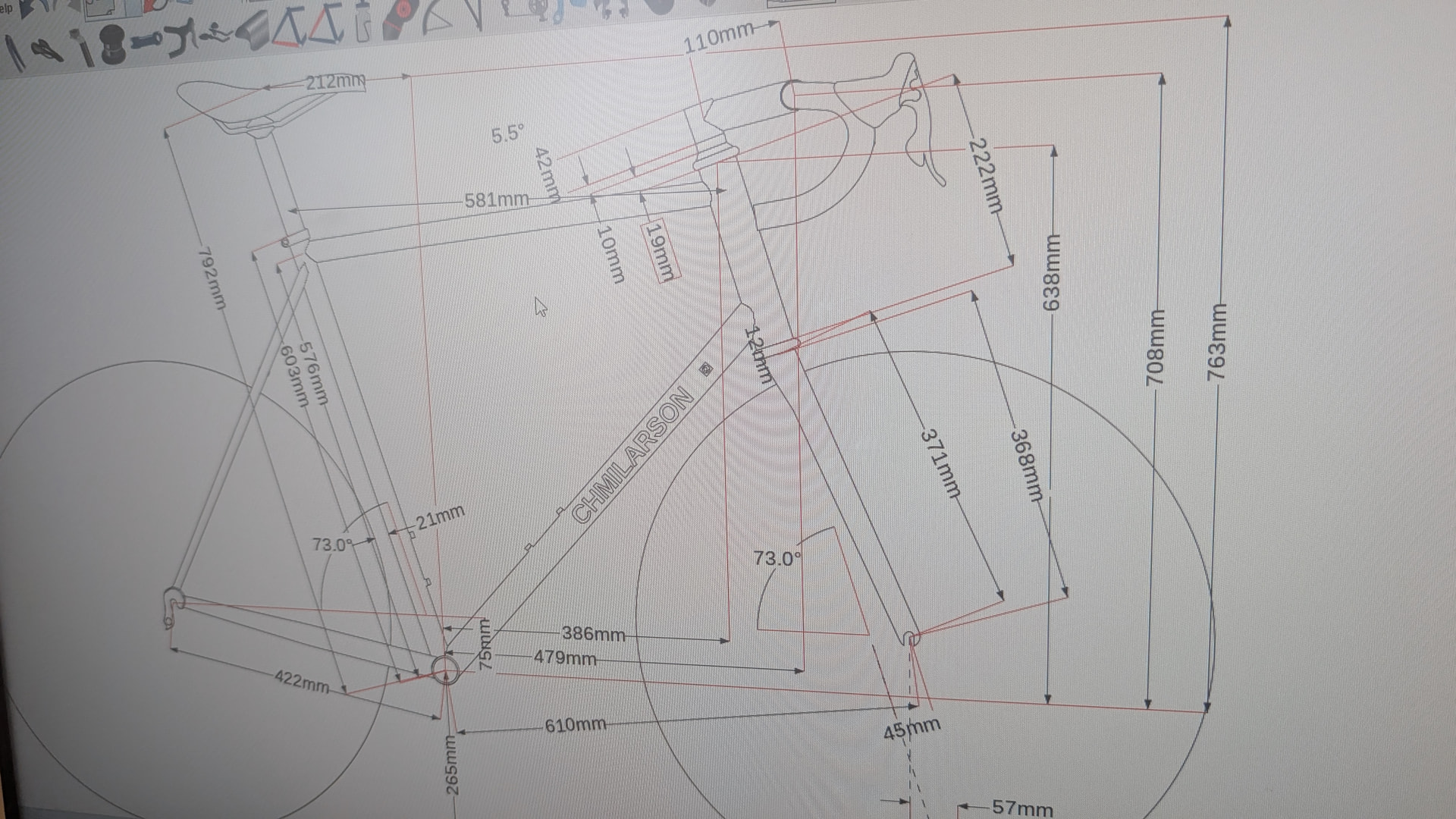
Hey everyone,
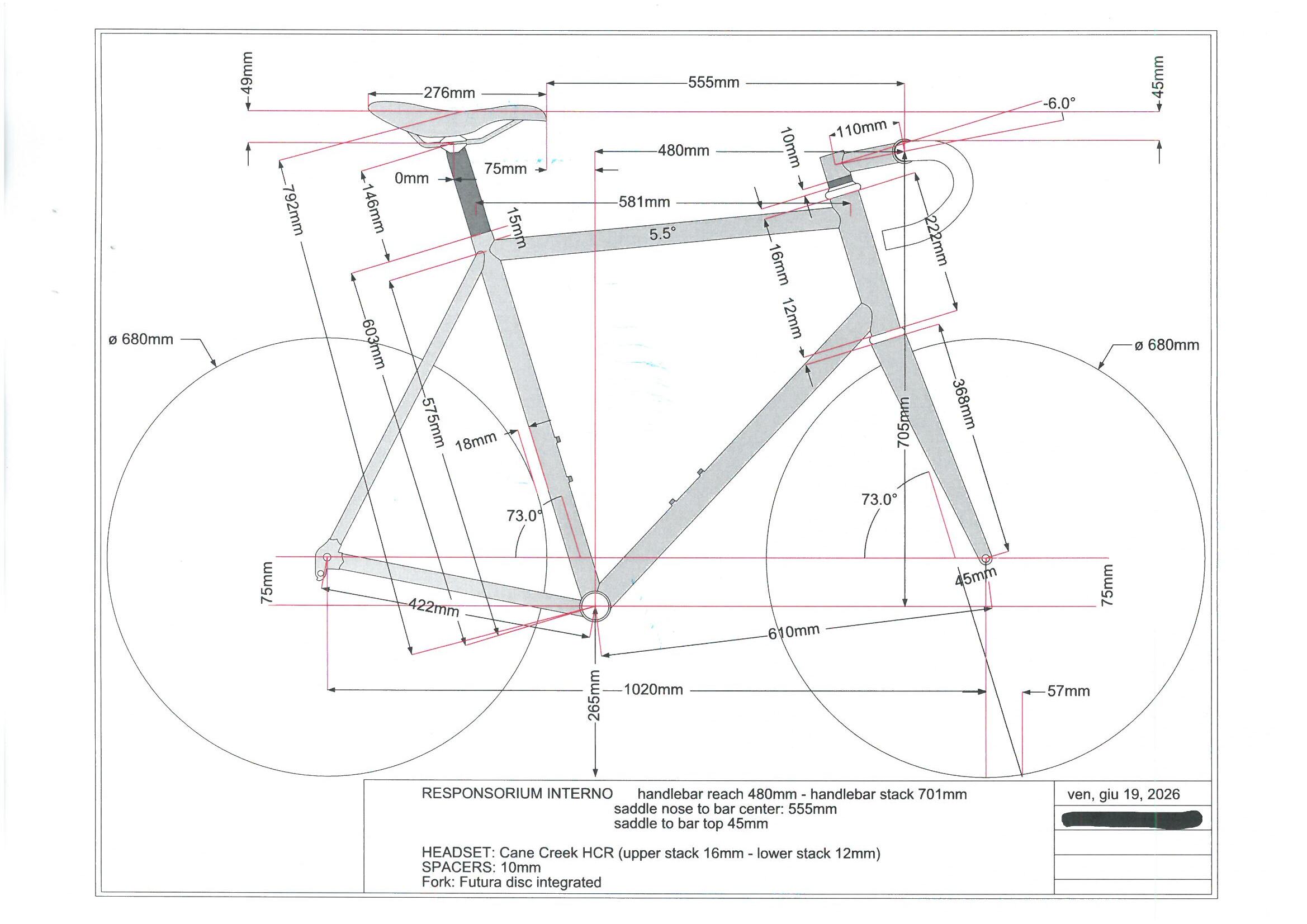
I ordered a custom frame from Pegoretti (Verona, Italy), a highly regarded frame builder. The frame they delivered does not conform to the agreed final geometry (attached). Specifically, the saddle-to-bar drop they indicated in the geometry (and which I wanted) is not achievable. The frame is too tall by 10mm. The frame was designed for a specific headset and stem and those were used in checking the drop. This has been verified by a professional mechanic, who issued a report. To achieve the desired drop a -12* angle stem would need to be used, instead of the -6* which was designed for.
I am looking for someone to help me verify whether the geometry they designed is correct, i.e. do the tube lengths and angles of the frame really result in the specified saddle-to-bar drop (on paper). If that is correct, I will know it is most likely an issue with the frame build. I have tried the free online tool bikegeocalc.com, but I would like a professional to do it using a professional-level program. If a problem with the design is identified, then I would like to obtain a report, which I could use in my case against Pegoretti. Does anyone have a suggestion who to contact?
Unfortunetaly, Pegoretti have been terrible so far. The issue was reported to them a couple days after delivery of the frame, which was a couple weeks ago. Since then, their position has been that the frame is perfect, I am probably measuring badly and that the only way to ensure that the measurements are correct is for me to bring the frame with components to Italy and have them assemble it. I have offered to take it for measurement to an independent mechanic, approved by them, but they refuse to entertain that idea.
Let me add that the frame was 5500 EUR!
Grateful for any advice,
Kuba
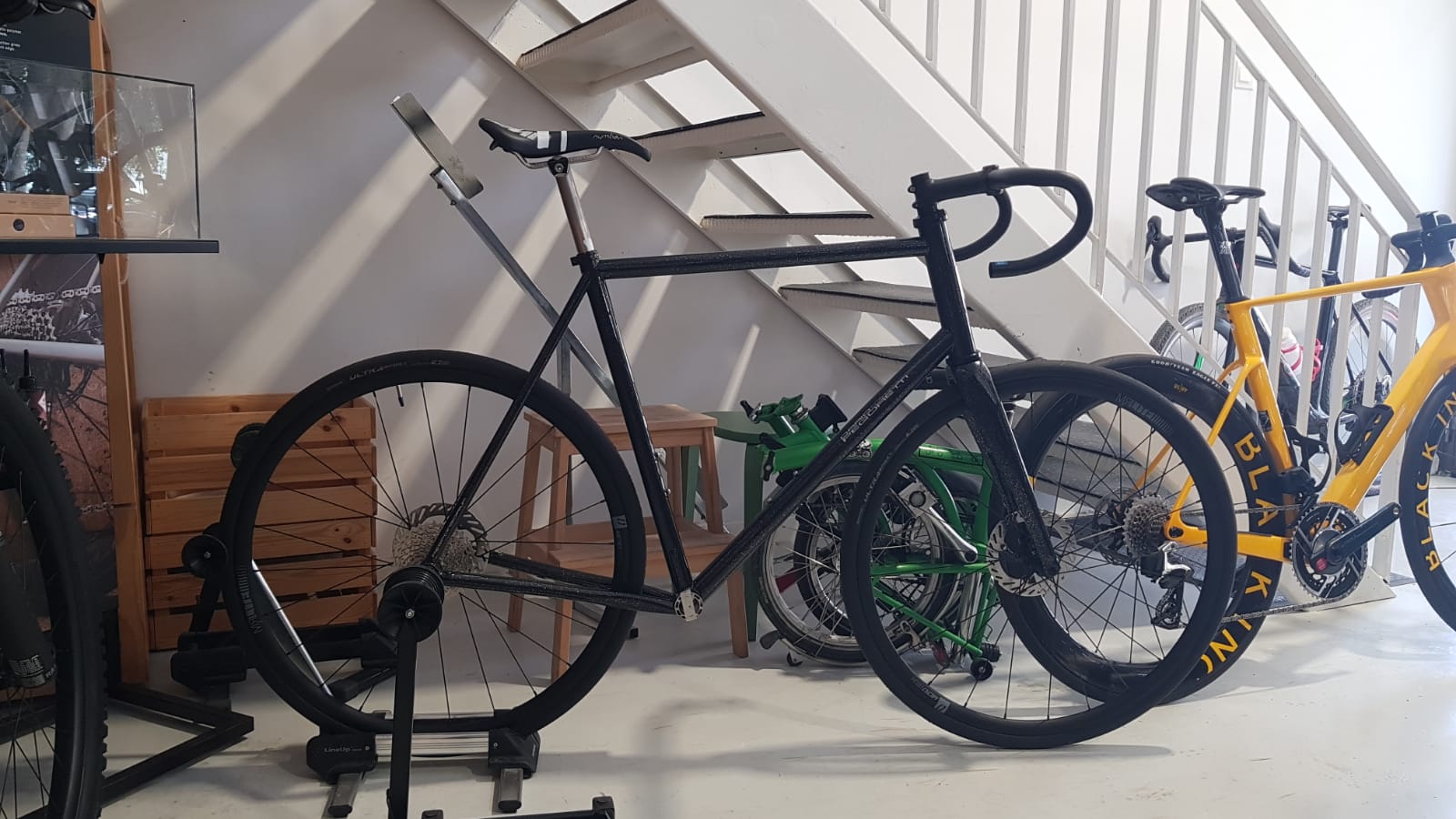
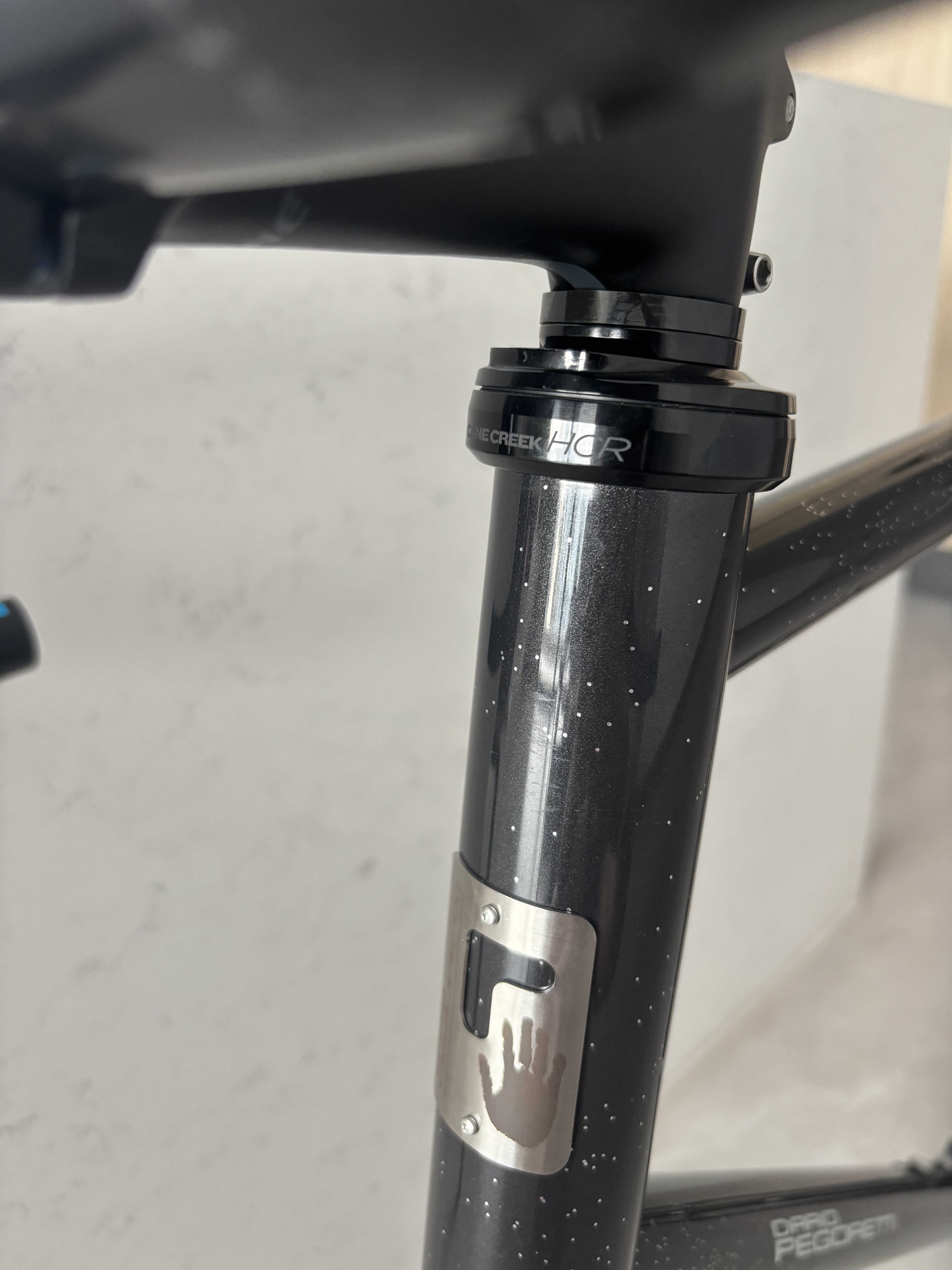
Here are a couple photos from the test assembly. Please note Cane Creek HCR headset specified in the geometry.
Is that a parametric cad model or simply a dimensioned drawing? I find the 75mm from mid seat post to saddle nose suspect..
That drawing was very likely made by bikecad.
The 75mm you are referencing is actually the measurement from the tip of the nose to the centerline of the BB
2 Likes
I am not a professional, but I am very familiar with bikecad. I re-created your frame based on the drawing. Everything seems pretty close.
One potential area for error would be the stem. Do you know the stack height of your stem (the distance from bottom to top of the steering tube clamp?)
To get the geometry to work, I had to assume a 41-42mm stem stack height. If it was modelled for a 42mm stack, but the stem has a 48mm stack (for example), it could push the bars up a few mm.
2 Likes
Nevermind. Looking again at the pictures, looks like a Ritchey 4-axis stem. Which is 42mm
Thank you. Exactly Ritchey 4-axis.
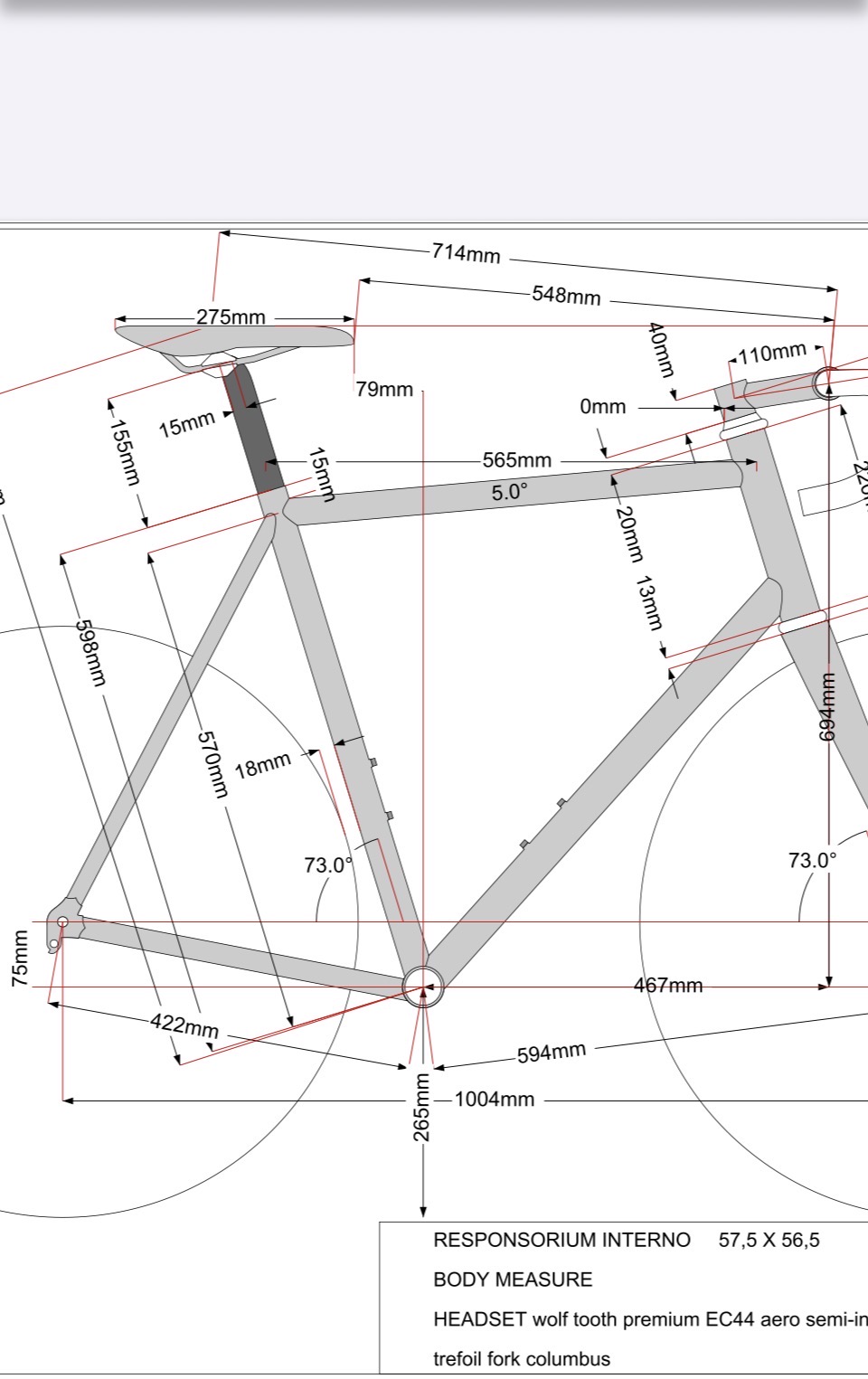
I assume the same: 75mm should be the saddle setback. It is my bike fit requirement, and it is what I wanted them to design for. I agree with @Scott_Anderson that it looks weird in the drawing. I looked at the preliminary drawings they sent during the design process and there the lines are more precise, from nose to bb center. Here is a snapshot of the first drawing (where they actually made the setback too big)
Looking at the drawing further, the measurement on the fork lists the length of the fork at 368mm
The spec on that fork is 368mm axle-to-crown (which is a different measurement than length.
In bikecad, if you have a length of 368, then the resulting axle to crown is 371.
I am at work, so I don’t have access to my bikecad pro to be able to access all of the measurements, but using the free version (with limited measurements), I calculate the saddle to bar drop at 41mm
2 Likes
Mmm, according to this site the Cane Creek HCR headset (the EC-version) has 19mm of stack. This may account for 3mm of the difference.
1 Like
One thing, which I forgot to mention is that we identified with the mechanic that they made a mistake in the headset stack height. They assumed in the geometry that the top part of the Cane Creek HCR is 16mm, whereas in reality (measured) it is 19mm. I could not find the specification on the Cane Creek website, but found it on Rose Bikes website, where it is also 19mm: Shop Cane Creek HCR Headset Tapered EC44/28.6/H19 | EC44/40/H12 now | Rose Bikes
So I guess that is a black and white mistake. I sent Pegoretti this info, but they ignored it.
Anyway, that still leaves 7mm…
Wow, thank you! It is my first time asking for any such advice on this forum, but you guys are very helpful!
If we take into account what Codey_Chmilar discovered - the discrepancy between the fork lenght on the drawing and how bike cad counts a fork with 368mm A2C -, there’s possibly only 4mm left to explain. Not to discourage you, but perhaps tolerances here and there (frame, fork…) and the way saddle height is measured can make up for that difference?
Not to throw a wrench into everything, but thinking it through, if you modelled a fork being 3mm too long, then when you built it with the correct fork, then the front end would be lower than you expected, not higher… Right?
1 Like
That sound less optimistic… Actually the fork is something I was thinking about. It is a Columbus Futura ACR (that is what the sticker says). Internal routing. I have not been able to find specs of this fork, only an old generation up to 28C tyres, this one being for 32C. Is there something worth physically measuring to check if drawing matches reality? I am a total amateur, but believe I could measure direct distance from axle to crown.
Their measurements have the drop from saddle top to top of handlebars.
My drawing you have a y axis measurement BB to top of saddle and BB to center of handlebars.
763-708 = 55mm.
If a handlebar has a diameter of 31.8mm, the radius is 15.9mm (to get a measurement to the top of the bar.)
55-15.9 = 39.1mm drop
Thank you! And that is with the correct headset top stack of 19mm. If you assumed 16mm, as they did , then you have 42.1. So 3mm is missing from what they got. Could the difference between 371 and 368 fork measurements explain how they arrived at a 45mm drop? Sorry if what I am writing is nonsensical…
It’s the other way around. They possibly modeled it shorter than it actually is, based on that A2C number.