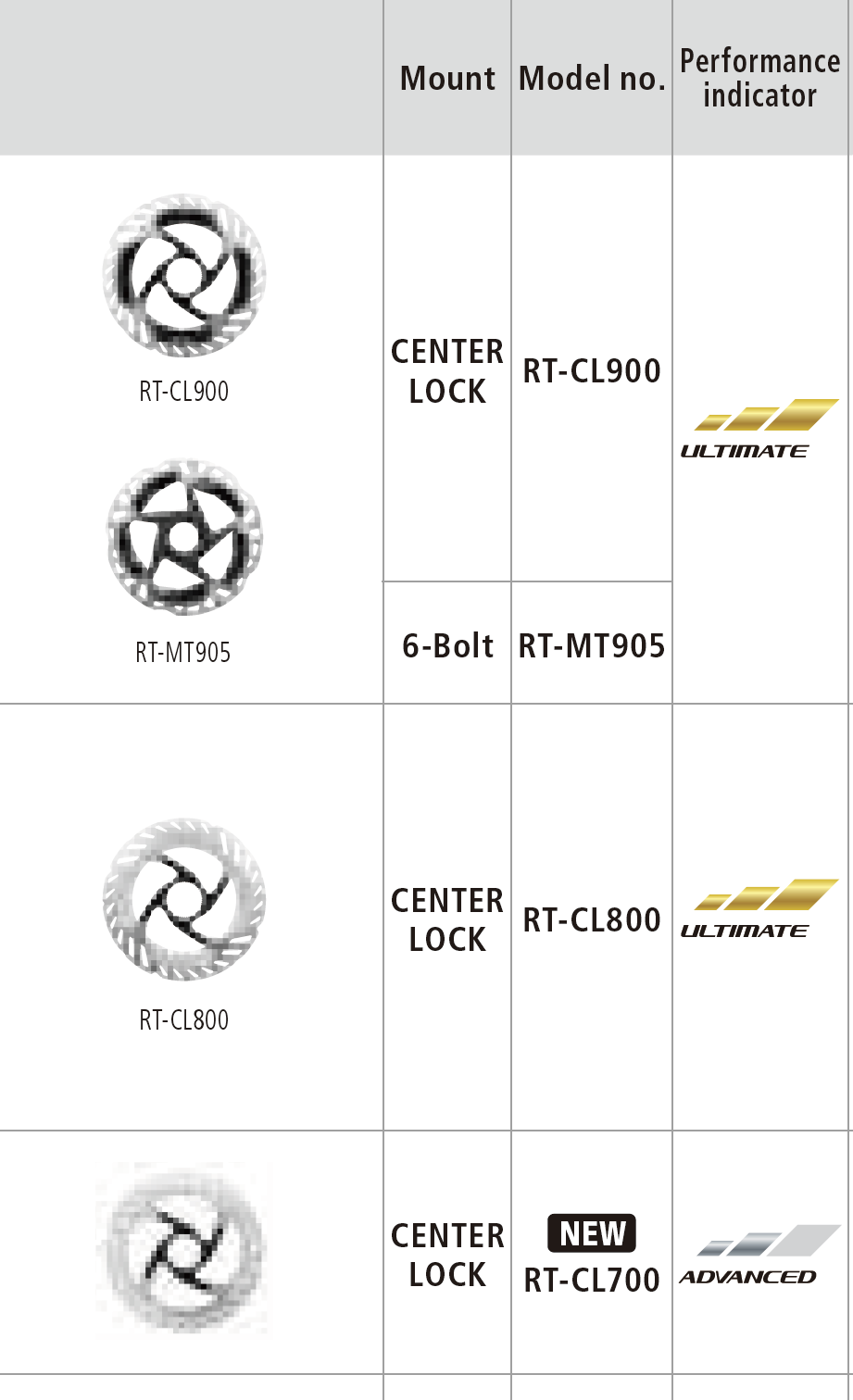
After Dave’s Tested: Real vs counterfeit Shimano Dura-Ace chains article, it’s been a present thought in my mind when buying any bicycle component “am I getting a counterfeit product?” So when I recently ordered up a couple new disc rotors, I went to a reputable bicycle parts website and pressed the Buy button on two of them.
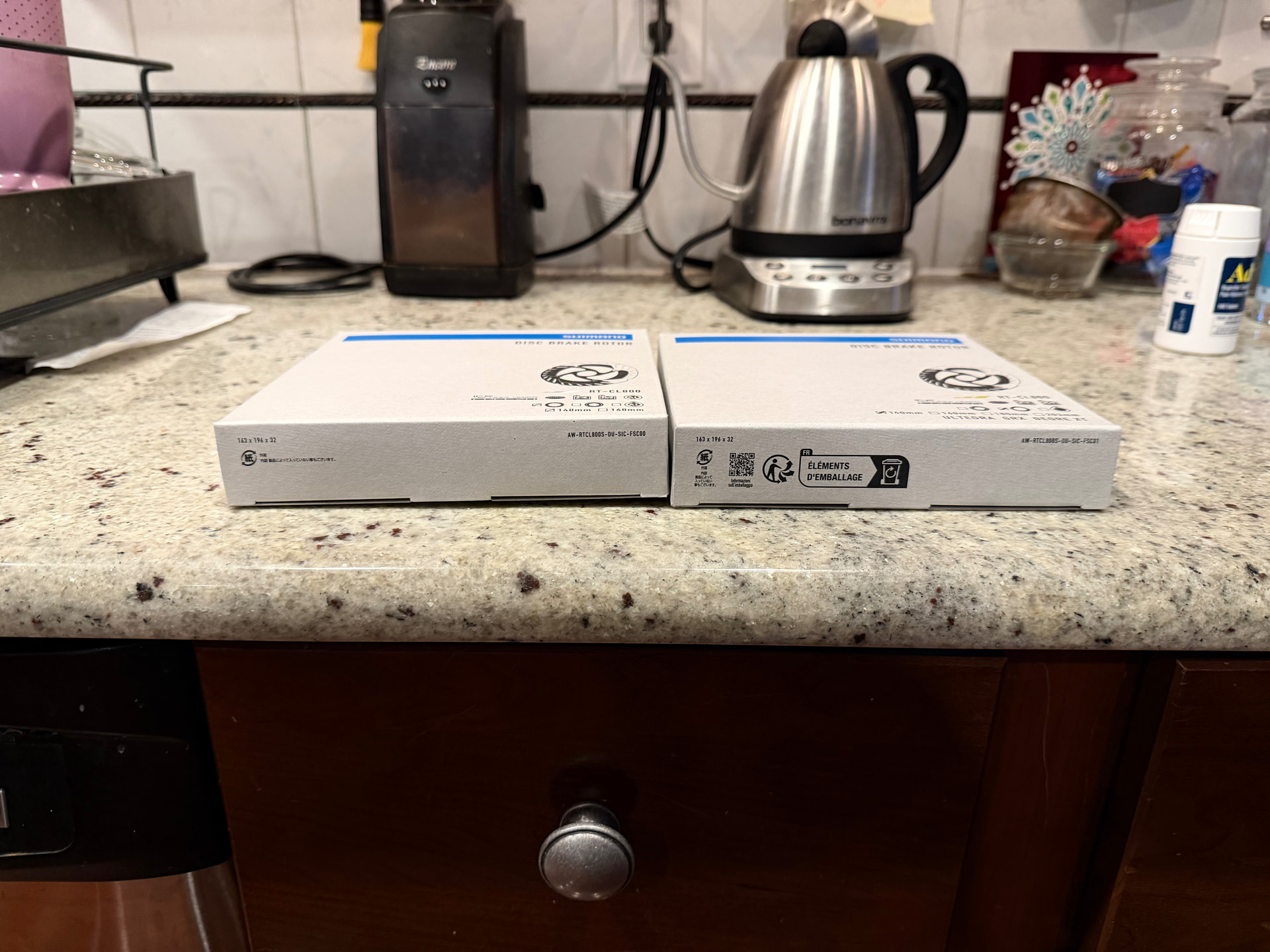
When they arrived, I noticed a packaging variation that left me wondering is one of these a fake? There was a spot of color on one package, and the same symbol was printed in a grayscale on the other. Lots of images below showing all sides of the box, the rotor, and the weight of the things.
I think I’ve got two genuine components that are simply packaged old vs new stock. If one were a counterfeit, why change the part number from “00” to “01”? I hope.
Couldn’t find much on this topic with Google or AI-powered searching. Wanted to see if anyone could confirm my belief that I’ve got two genuine parts here. And hoping if someone else searches in the future with the same question I’ve got, they can find this post.
What first raised my suspicions. Below the rotor image and to the left of “RT-CL800” there are three segments. On the left, they’re in grayscale. On the right, in a gold color.

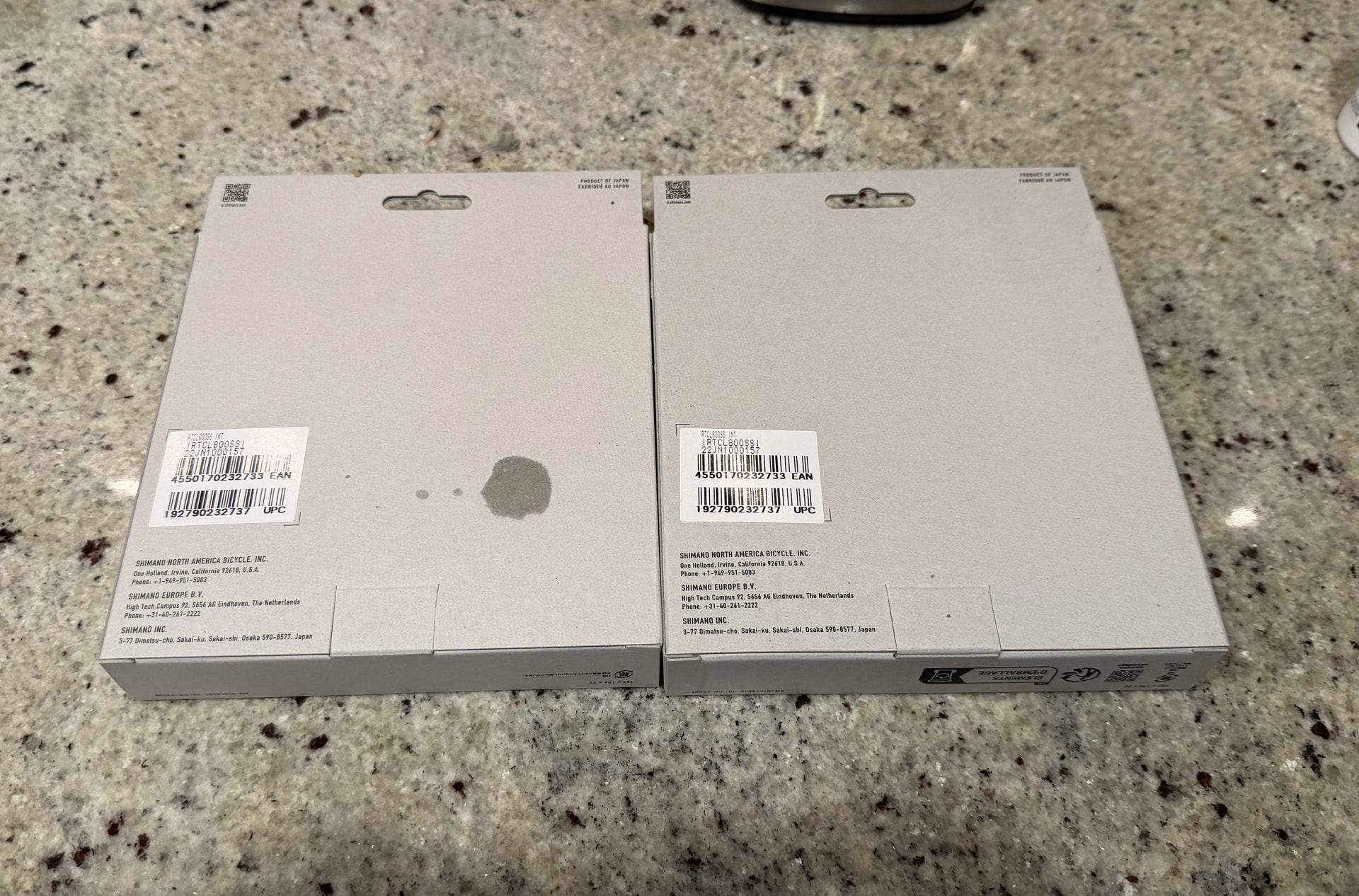
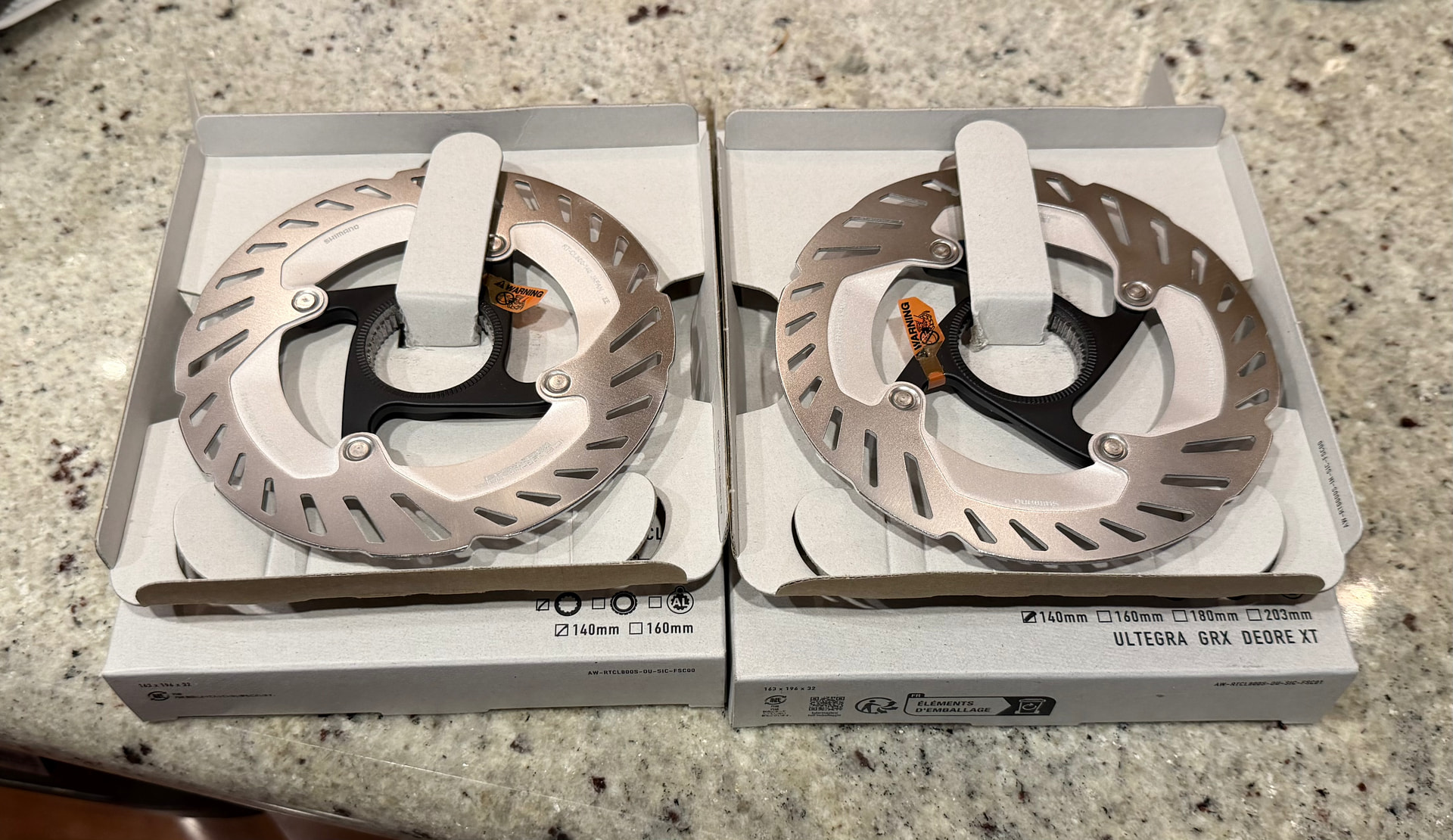
Other sides of the packaging. Minor differences on the bottom of each box. And, a change in part number?
- AW-RTCL80OS-OU-SIC-FSC00
- AW-RTCL80OS-OU-SIC-FSC01


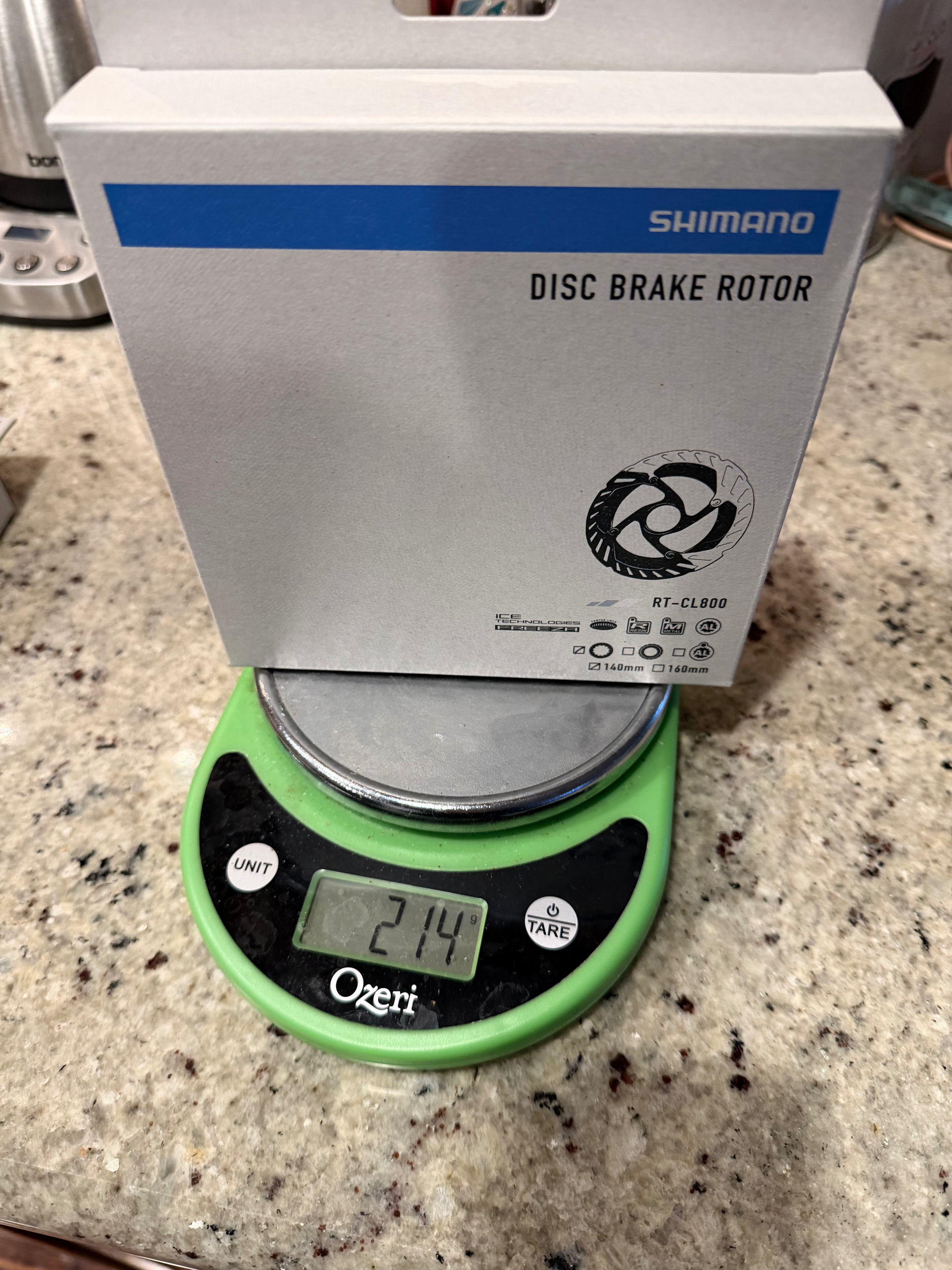
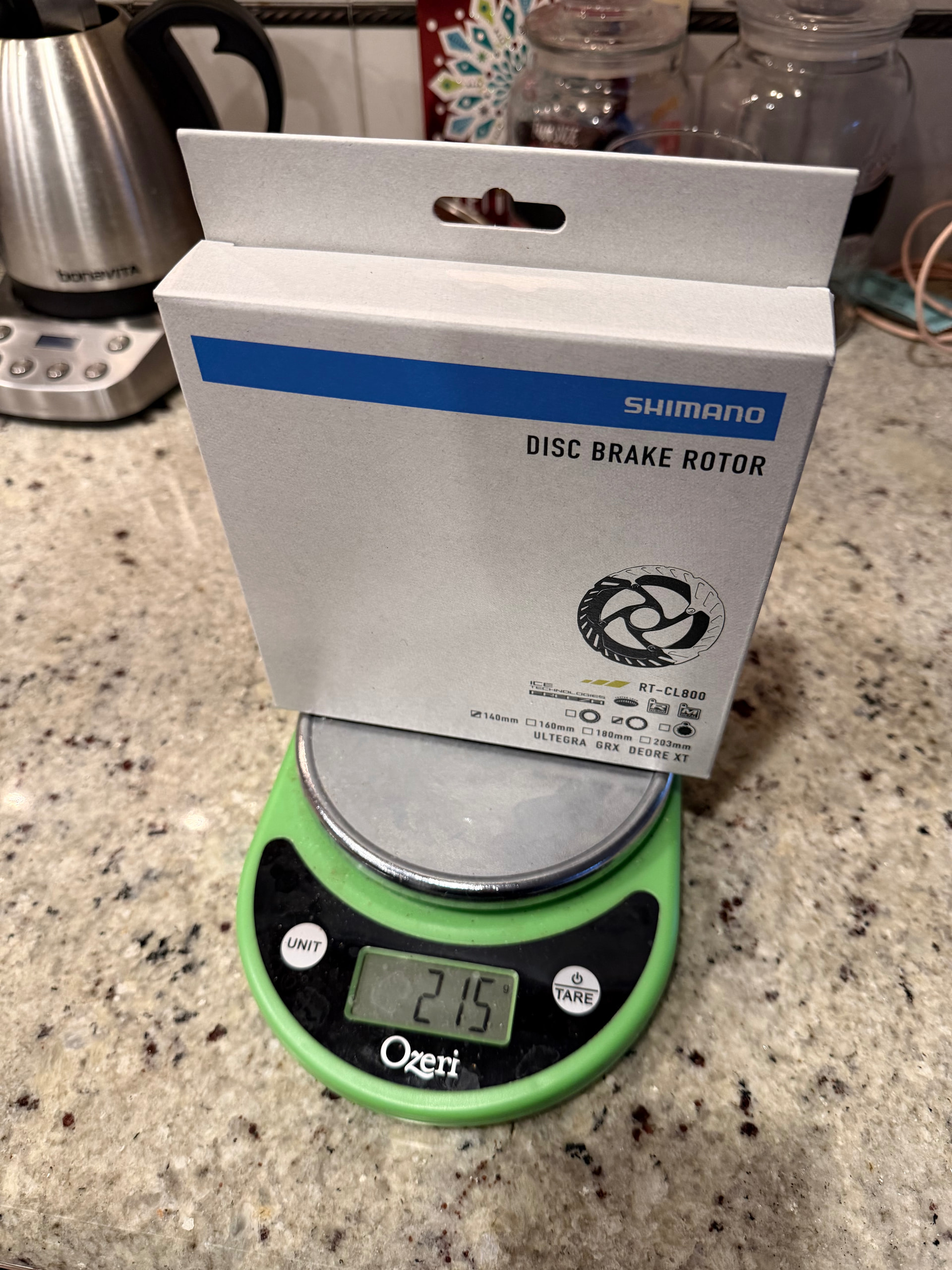
Similar weights. Ideally means one rotor isn’t made of painted cardboard.
Front of each rotor appears identical.
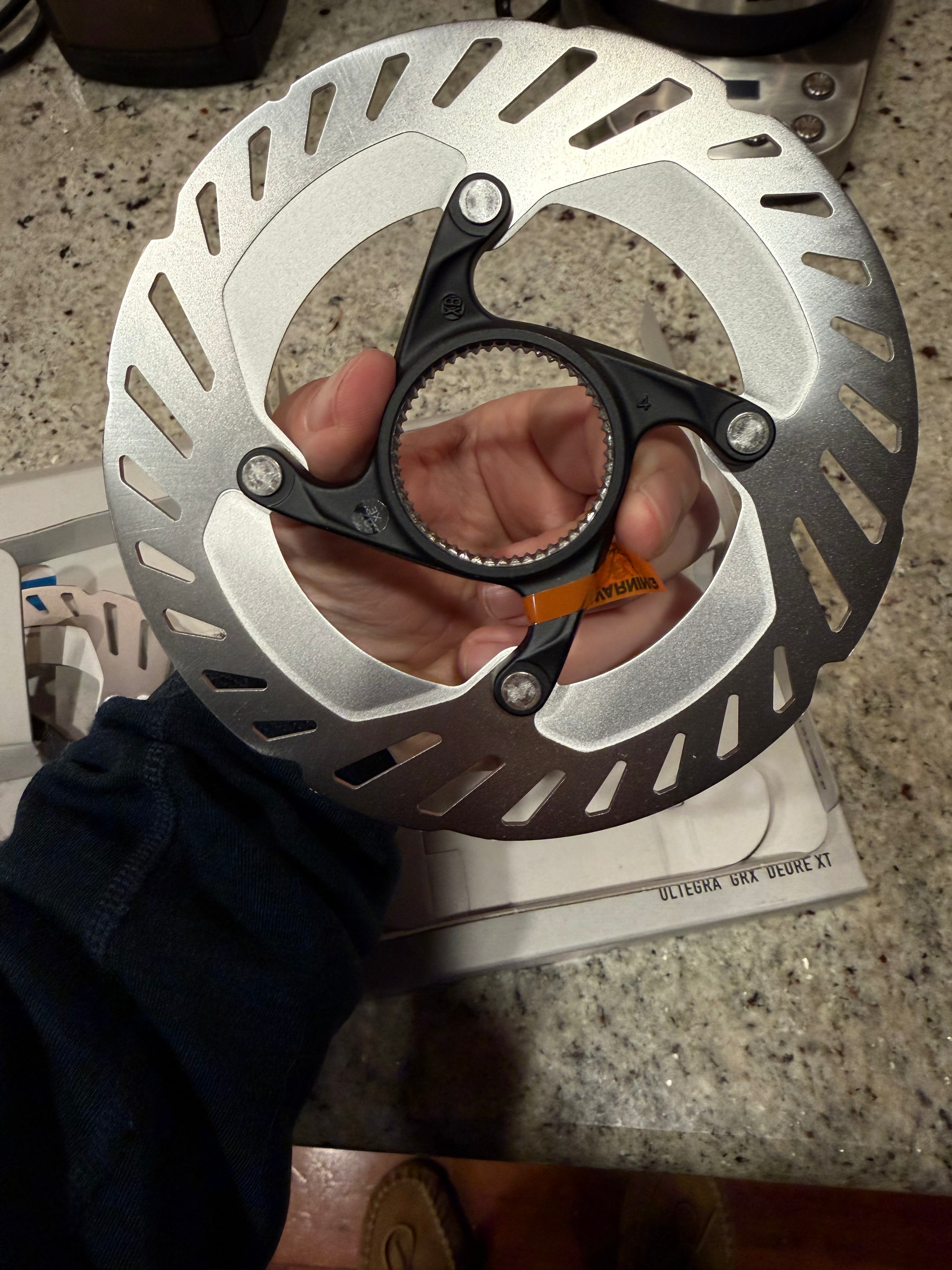
But on the rear, a difference. At the 3 o’clock position, notice the one rotor has a “3” imprinted and the other a “4”. More evidence of what I hope means this is an incremental revision or branding revision to the rotor.

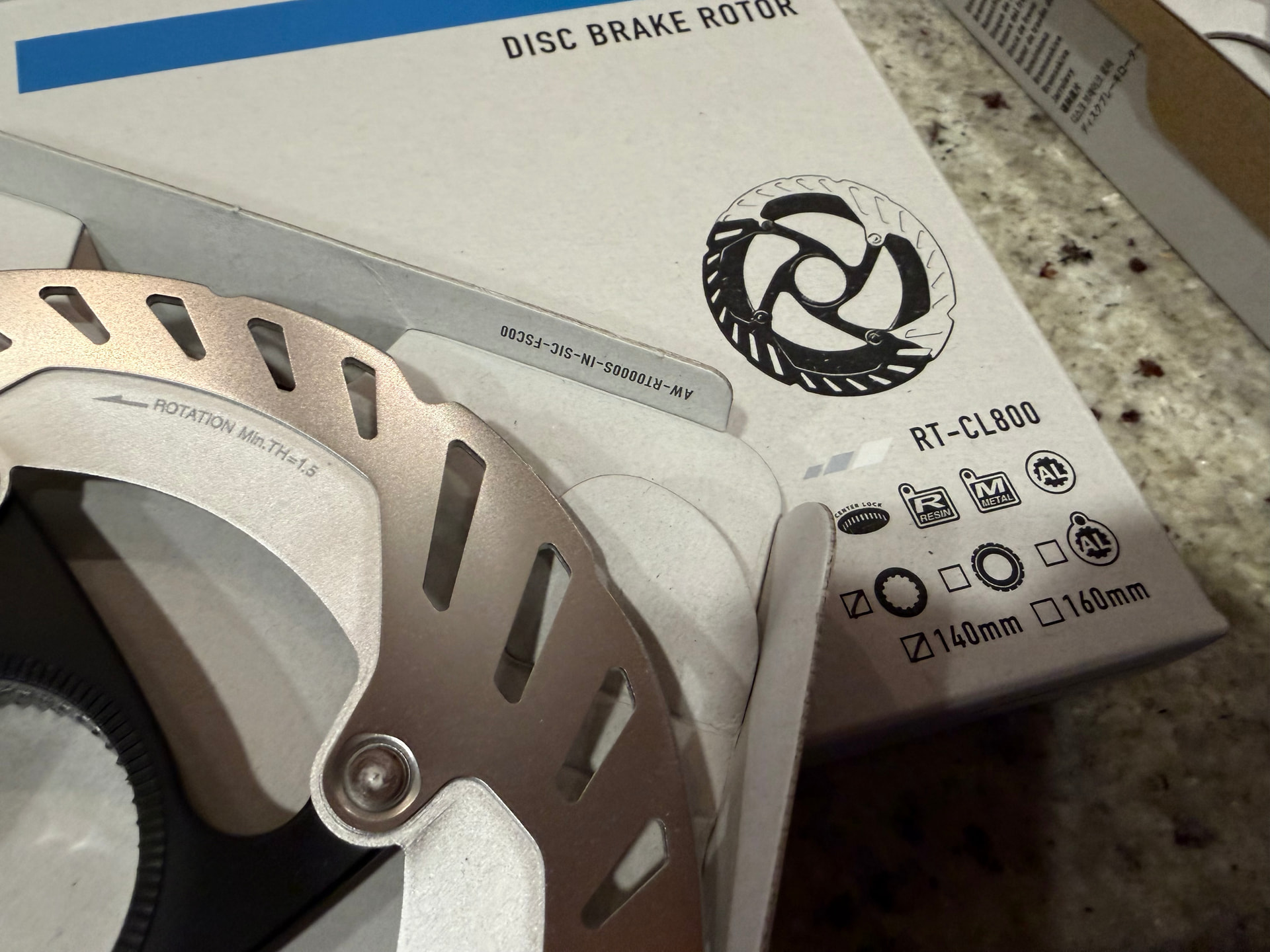
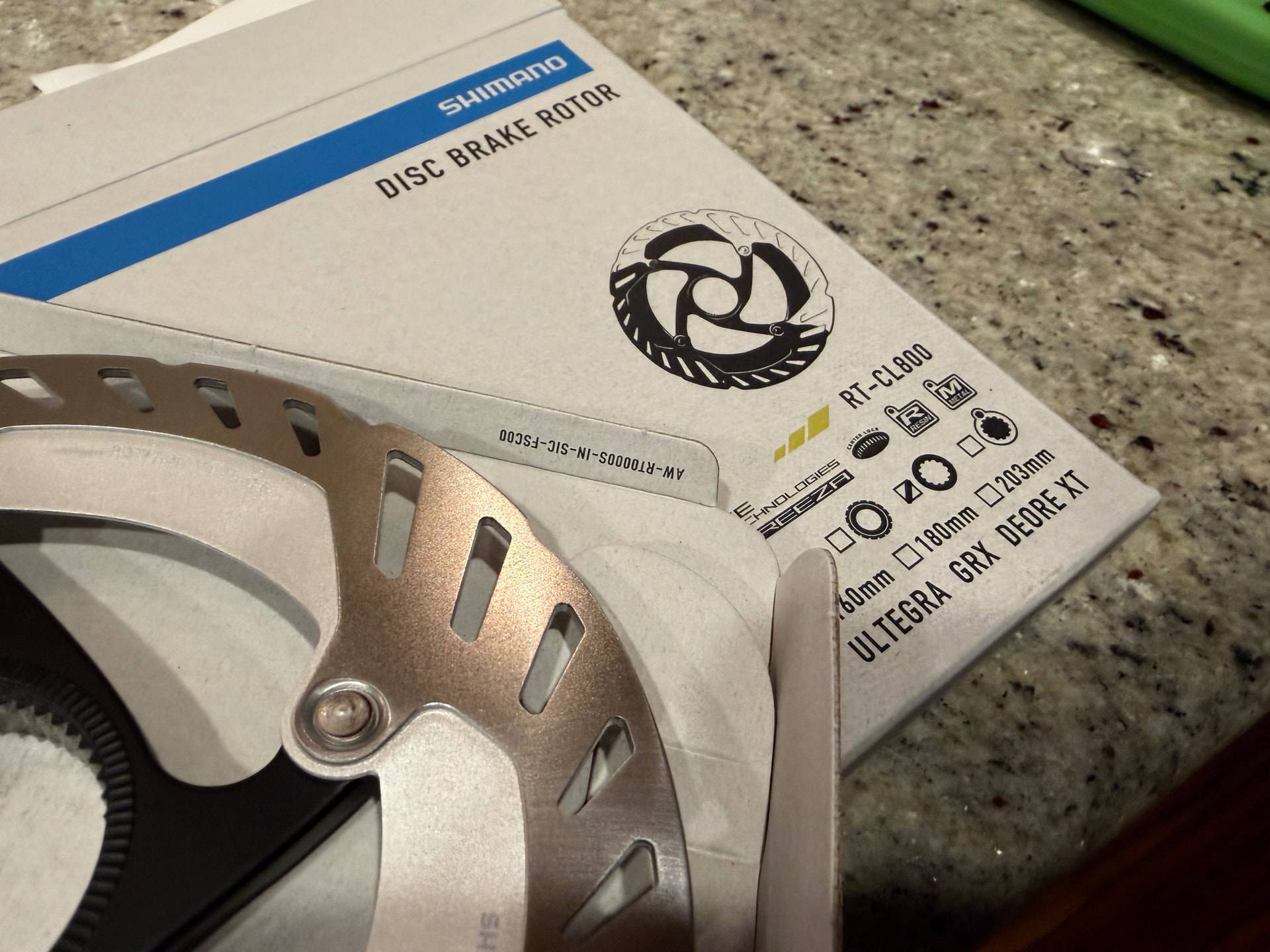
And finally, what I assume is a unique identifier of the card insert packaging itself? Both rotors had the same value: AW-RT0000S-IN–SIC-FSC00. Was the differing part number “AW-RTCL80OS-OU-SIC-FSC00“ vs “AW-RTCL80OS-OU-SIC-FSC01” seen above indicating the outer packaging was different, while here the similar value indicates the packaging inside is the same? Is “IN” to mean “inside” and “OU” to mean “outside” packaging?
Anyways, if anyone has some insight I’d be curious to know more!