Can I humbly suggest adding bead to bead or height for tire measurements?
I feel many Internet debates over “volume” are quibbles over mm of width. Actual volume is more relevant to pressure choice and height is as important as width for frame clearance these days
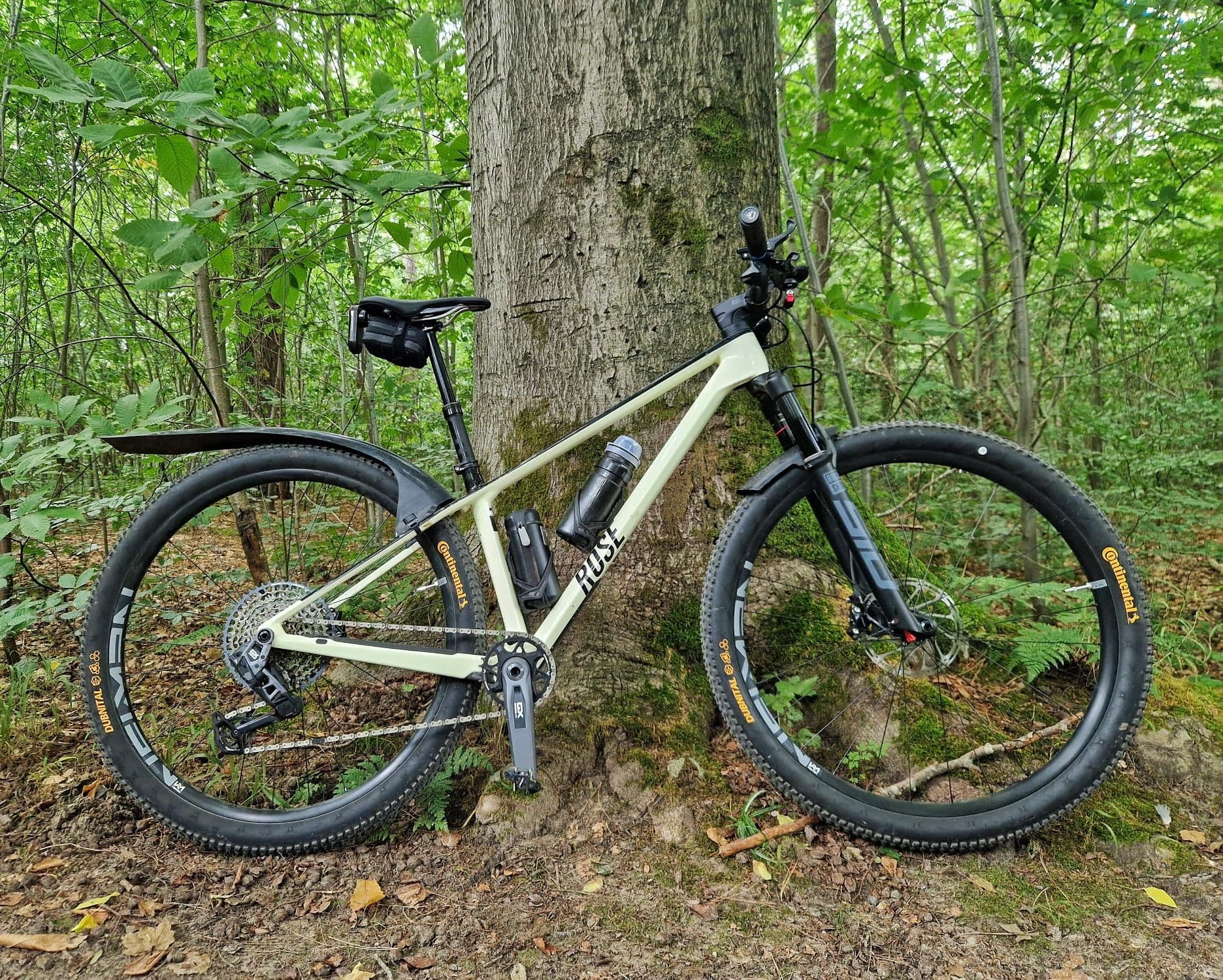
I’ve been riding them (Rapid 2.4”) because I flatted to much on the Maxxis Rekon Race and it also didn’t have enough grip in mud.
After a lot of comparing on the BRR website I decided to go with this one because it was a good mix of flat protection, grip and speed. In Flanders we don’t have a lot of very technical downhill but plenty of steep short uphills and different terrain. The first thing I noticed was the speed and the grip in the corners, it felt much better and more confident.
In my test course there is a steep uphill that I can go up if it’s dry 75% of the time but if it’s wet that falls down to 25%, with these tires I could go up twice when it was wet and I also had better times on flat terrain (so Rolling Resistance count the most there) than on the Maxxis (but that’s not very scientific).
It is also a bit better in the mud, but it isn’t a mud tire, so don’t expect them to be the best in it.
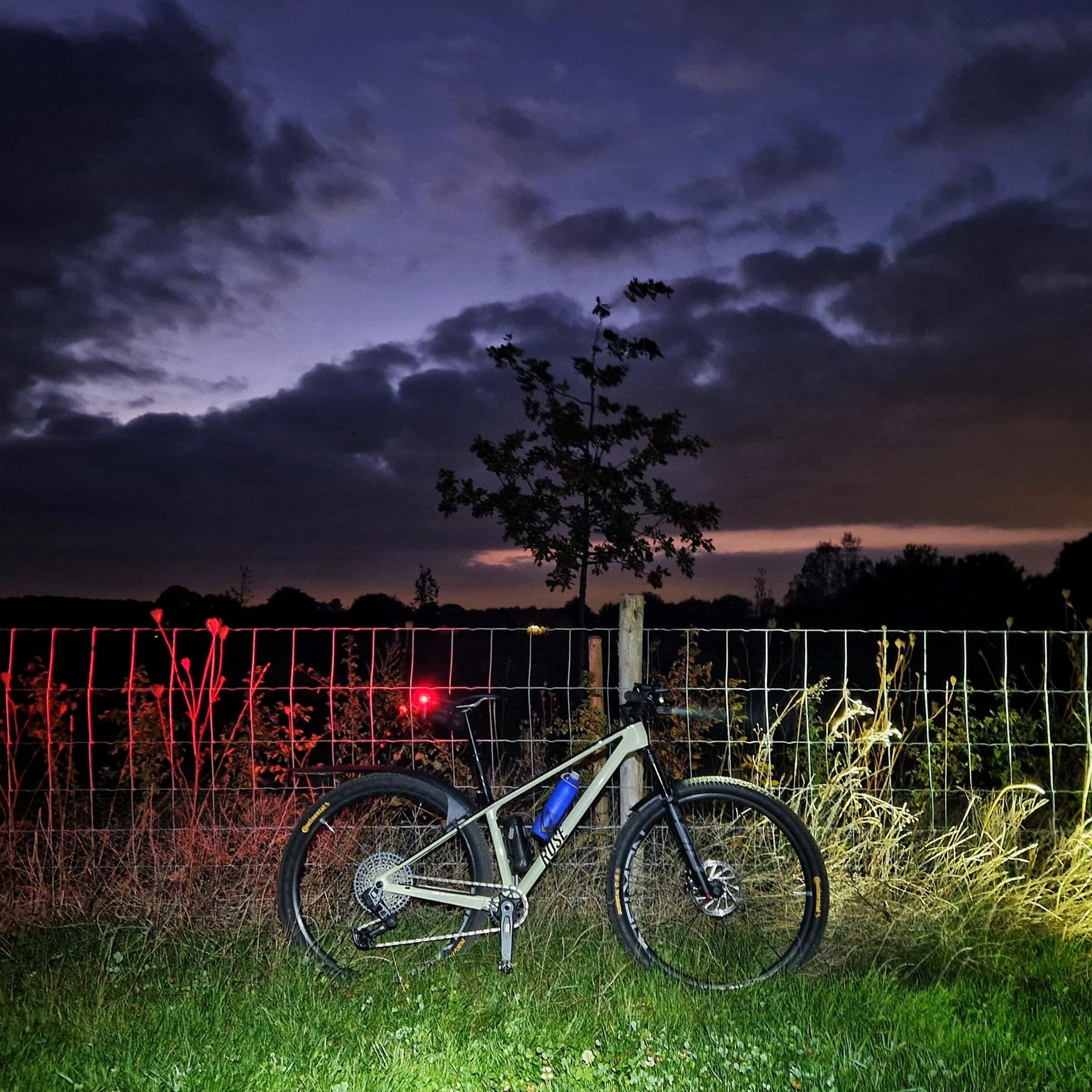
They are fantastic on gravel (my gravelbike has been turned winterroadbike since a few weeks) so I do nighttime rides on my MTB and I do a lot of gravelroads because when it’s dark that’s technical enough for me xD.
The only bad thing I noticed (or at least noticed because I rode them a few days after the Maxxis) is that they are a bit less comfortable than the Maxxis, it’s hard to explain but it feels that they have a little less give, just like Continental 5000gp’s compared to Pirelli’s and Tufo’s.
I spent the summer split between 2.4 Peyotes and 2.4 Dub Rapid Race, riding in the twin cities of Minnesota.
The peyote has a superior ride feel, it just seems more planted and damped. Runs a true 2.4 on 30mm rims. Crazy fast on dry hard packed clay trails, gets dicey when things get sandy in the corners, and when you lose grip in a turn, it doesn’t come back. Should add, sand isn’t its worst place, it is when small gravels build up on a hardpacked trail. They just don’t have enough lug to get through the marbles and hook up with anything below that.
The dubs are nearly as fast, run about 2.37ish on a 30mm rim and are less “fun” to ride. They lack the ride feel that peyotes provide, BUT they are far superior in corners. They will break loose but I am yet for them to just drop out from under me when they slide. They catch and keep cornering really well if you can stay committed to the lean.
One thing to note, I think they both have about the same volume, the peyotes make their volume in width and the dubs in height.
I love the Peyotes, I begrudgingly ride the Dubs. Would really like to try the new barzo xc casing paired with a peyote in the rear.
I recently switched to the Dubnital 29x2.4 Grip Race casing from Schwalbe 2.4 Ricks. The Conti’s feel just as fast as the Ricks with much greater cornering traction. I am riding Wisconsin trails east of Minneapolis where the trails this Summer have generally been dry and grippy. The Dubs definitely climb much better on loose, rocky and punchy climbs. The really light weight is another bonus. No flats yet.
My Dubnitals measured 57 mm on 28 mm ID rims the day I installed them. It’s been almost 4 months of riding and they’re bang on 60 mm right now. I used 2.2 race kings, but it was a long time ago and on narrower rims, but I’d say they are a lot wider
I agree that they work surprisingly well in damp conditions. I was shocked at how well they worked at the Firecracker 50 this year. I’m not sure they would have done as well if I had ridden the first lap when it was actively raining, but second lap they were great.
I’ve been running Dubnitals since late June on the Front Range of CO. I went with the Trail casing for the rear and the Race casing in the front both in the Grip compound and 2.4 size. Here are my thoughts:
Overall volume is excellent. The tires are very round on my 28 mm ID rims which makes them very predictable in corners
Braking traction is maybe not as good as Vittoria Mezcals, but it’s close.
Cornering is excellent at basically all lean angles (see above comment about the shape of the tire).
Pedaling traction is good as well. I haven’t spun any tires in any place I wouldn’t expect to spin an XC Race tire.
I’ve had zero issues with them, but I’m glad I put the heavier casing in the rear. Everyone I know who uses the Race casing in the rear has trashed them within the first few rides here.
They feel faster than Mezcals, but that could just be because they’re quieter on pavement
Tire wear has been quite good. As you can probably tell I’ve been using Mezcals recently and they’re always trashed after a season of high school MTB coaching, but the Dubnitals still have life left.
I could try the Race compound in the rear, but to me the extra traction of the Grip is more important.
Overall, I like them enough to buy a new set next year. It also helps that they’re cheaper than equivalent tires from competitors.
I used the Rapid Trail version for bikepacking racing this summer and then more general cross country riding in Bellingham. For bikepack racing on the Cross Washington XWA route I found them to feel similarly fast on gravel and pavement as the Vittoria Mezcals, but with a little more grip when braking hard because I can’t lean the bike as easily when it’s loaded up. That route covered rainforested trails on the west and then chunky and loose cobble/rocky terrain as you get to the east side. I personally loved them since they felt like they could sink just enough into dirt to be confident, and still roll fast. On the looser terrain they felt pretty good, but maybe a little squirrely at speed.
For my local riding, they’ve been great for my local trails with only one little crash on dusty roots where I lost my front. My psychopath friends and I also took them for a big day of XC riding in Whistler and they still held up but I found the hard limit of what I feel comfortable using them on.
I think I have about 1800 miles on them now with no punctures. Some slightly worn sidewalls and knobs are looking medium-amount worn down. But I think the PNW dirt doesn’t really wear tires down and wear probably mostly comes from riding to the trailheads.
So a follow up to my comments earlier in this thread. 24 hour race done, weather was warm for this time of year ( 12 degrees C) but changeable meaning the course varied from hard packed fire roads to a muddy wet rooty section and everything in between. Ran 2.4 Dubnital Rapid Race front and rear on some 30mm int width Hunt Proven carbon rims. My thoughts…..as Caley said I also thought the they were pressure sensitive. I am 79 kg kitted up and started with them at 19 psi in front and 20 in rear. They felt good on the hard pack but way too firm on rocky singletrack and I felt bounced about. After first 6.5 mile lap with 1000feet of up and down I dropped front to 16.5 and rear to 17.5. Felt better but after 4 laps I changed to my other bike with Ray front and Ralph rear, both 2.25 on some 23mm int rims. The dubs felt more planted and faster rolling but the Ray felt like I could rail the berms better. The muddy section deteriorated and as I swapped back to the Dubs I dropped the front to 13.5psi and rear to 15. This is exactly what the Silca pressure calculator recommends. Felt so much better. I had one rim strike on the rear but I was really fatigued and it was a hard square edge hit but tyre was ok and didn’t lose any pressure. Overall I’m very happy with them and I think they will be an excellent 3 season tyre.
@caley_fretz just read the write up, great article, I shared it with my NICA high schooler.
I’m a decent trail rider but only been involved with XC racing for two years since my boys started. one thing I don’t understand:
“If your rear tire breaks loose, you’ll probably be fine; if your front breaks loose, you’re going down.”
But also
“you can lean, lean, and lean some more, and then those side knobs finally catch”
I’ve certainly lost the front and gone down. I haven’t experienced the second situation. Is this something that a high school rider would be expected to .learn? Or a more advanced skill? Trying to get a sense of how to teach my boys and what is a reasonable
Those two lines are talking about separate things. The front tire thing is simply that if your front breaks loose, it takes a lot of skill to keep things upright. Most riders won’t. So you want a tire that has margin for error up front.
The leaning bit is just about when the tire “catches.” A lot of these XC tires have minimal center and transition tread, then big side knobs. They’re designed to have basically zero knob contact with the ground when you’re rolling along in a straight line, as that’s faster. To get them around a corner fast, you need to lean the bike to get the larger cornering/side knobs into the dirt. With some tires, that requires quite a lot of lean (the Aspen for example.) If you don’t use a lot of bike lean you’re not going to get the maximum cornering traction out of the tire.
2.4 Rapid Rear 2.4 Grip Front: Epic 8, 196 LB rider. I ran them too low to start, per the Silca pressure calculator? Silca says 13-14psi?? The rear squib scared me at low pressure !! Now running them at 23-24 psi, no squib. 61C under calipers. They roll like a dream. Your review is constructive. @caley_fretz I wish we had more such reviews. I may prefer the Specialized Cambo to the Renegade 2.35 front, and the Air Trax (rock slice killed it) 2.35 rear…TBD It takes time to form a valid opinion. I don’t have longevity in the sport to be a valid tester. Rode MTB in the 80s and early 90s, not since.
Hello, I’m currently running Barzo front/Mezcal rear (both XC race) and find that combination pretty good for the “gravel over hard” that I typically ride in Northwest Arkansas. I’m interested in trying the Continental line. What do you think would be the equivalent combination in the Contis? Trinotal front/Dubnital rear?