I had a raw Nicolai for a spell last year - no issues at all. The raw Knolly I had before that was a different story, though…
But no, I’ve decided not to clear coat it.
I had a raw Nicolai for a spell last year - no issues at all. The raw Knolly I had before that was a different story, though…
But no, I’ve decided not to clear coat it.
Thanks for sharing, I am considering a Nicolai Argon GX as my next commuter/gravel bike and it really looks sexy in raw aluminium. It accentuates the burly, industrial look. Or, in your case, the satin metal finish is just 

But since this is going to be whatever the opposite of a garage queen is, I am worried that no protective coating whatsoever will lead to issues down the road.
It won’t do in terms of serious corrosion. Nicolai wouldn’t allow that to happen.
You might experience minor markings from sweat, but that’s nothing a ScotchBrite pad can’t sort (Nicolai decals are just vinyl logos on the down tube so they’re easily replaced if you scuff them, unlike the way I had to work around the painted on stuff on my Knolly), and you could always put protective wrap on it.
The anodised Nic’s look amazing too, though. I changed my raw one for an ano black (I was between sizes and took bad advice, but still wanted the same bike) and I bloody love it!
Yeah, anodized looks great.
My favorite is titanium, but they don’t offer that for this finish for the Argon GX, because (support told me) that they couldn’t get the quality they want (inconsistent color) and the entire frame won’t fit into the “bath”. For their ful sus bikes they can anodize front and rear triangles separately.
But thanks for the feedback, looks like the raw finish is an option that doesn’t hide the tool marks.
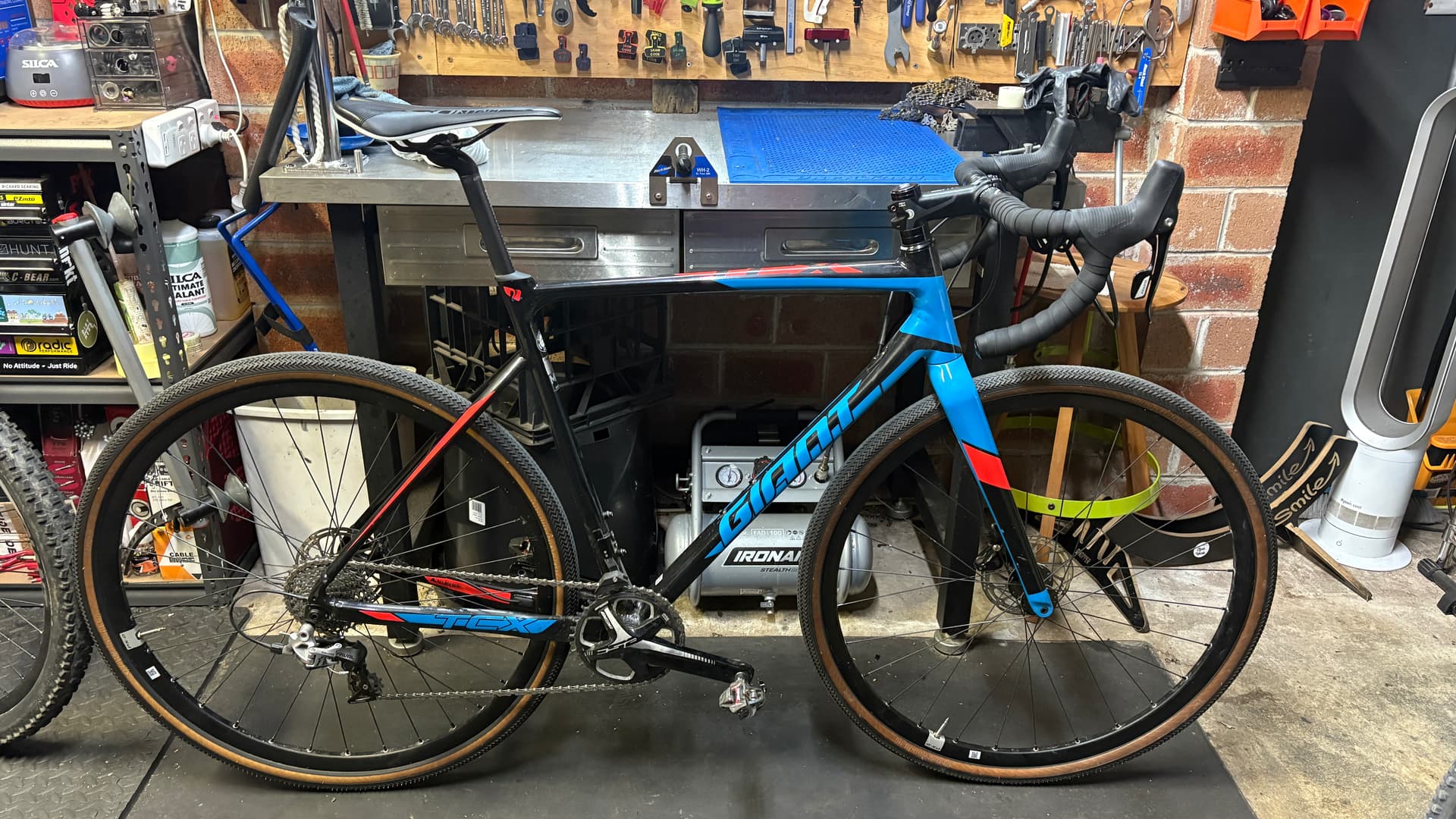
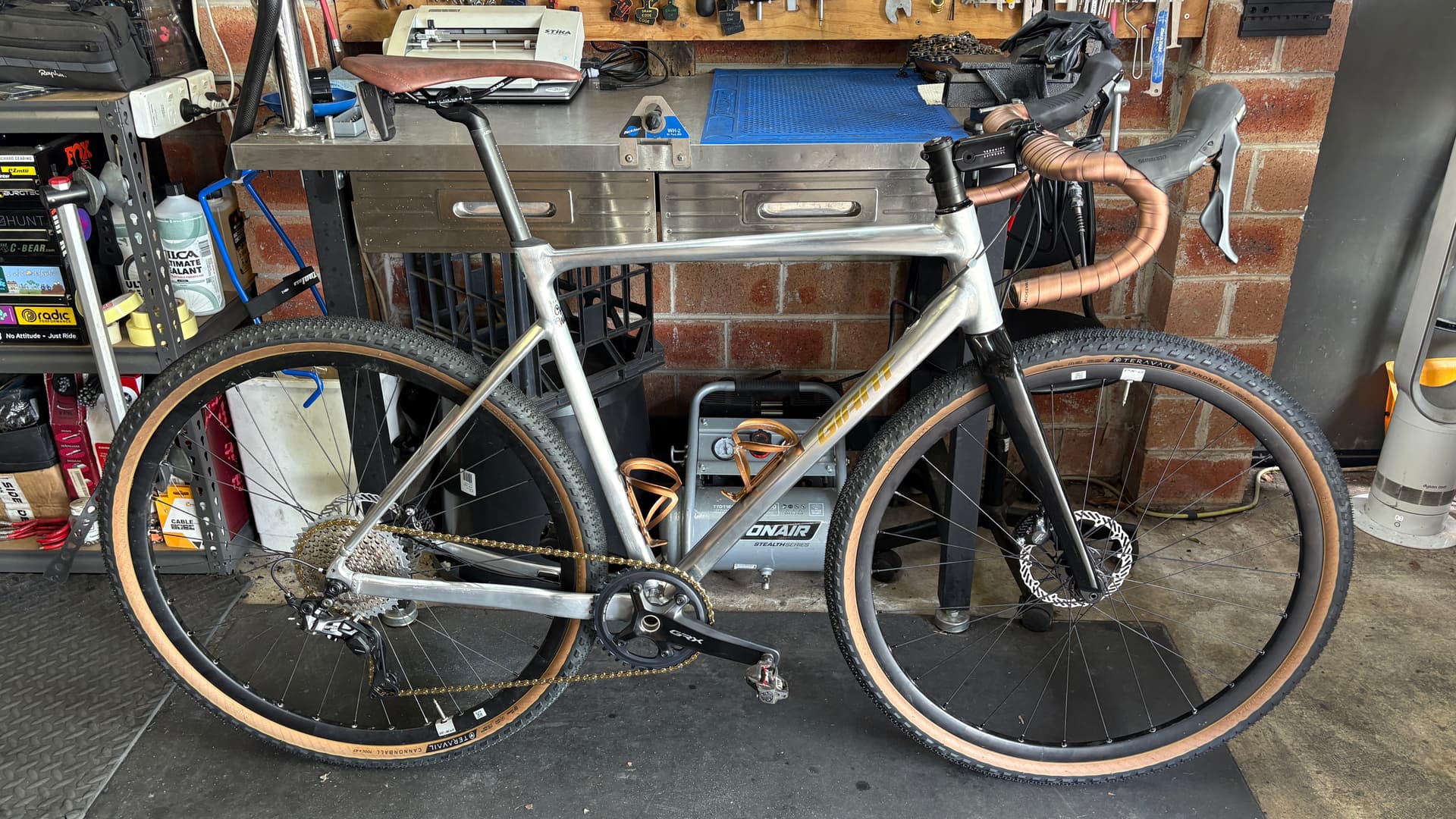
Here’s a before & after:
This light makes it look rougher than it is, but I was never aiming for perfection.
The logo will become a bronze colour once the vinyl arrives from my supplier.
Looks amazing. Much prefer the subdued aesthetic (and the colour matched (?) bartape/saddle combination) over the original paintwork…
If you are only after protection, you could apply the Boeing process (phosphate anodisation followed by binder coat) https://www.sciencedirect.com/topics/engineering/phosphoric-acid-anodization
I used a variation on this as an interface layer when bonding aluminium parts (eg BB shells) into carbon parts. The surface layer is so thin it looks very similar to raw aluminium and has the advantage that any dings or scratches can be repaired by repeating the process.
You can buy phosphoric acid at any home brew store and a USB power stick works well enough as a voltage source, just stick a wire wound resistor in line as a current limiter. Use a thin clear polyurethane or acrylic to seal.
Thanks Mark, but, after sweating on it a fair bit yesterday for its shakedown ride, it’s looking like there’s no need for a protective coat - it’s come away from that outing completely unmarked.
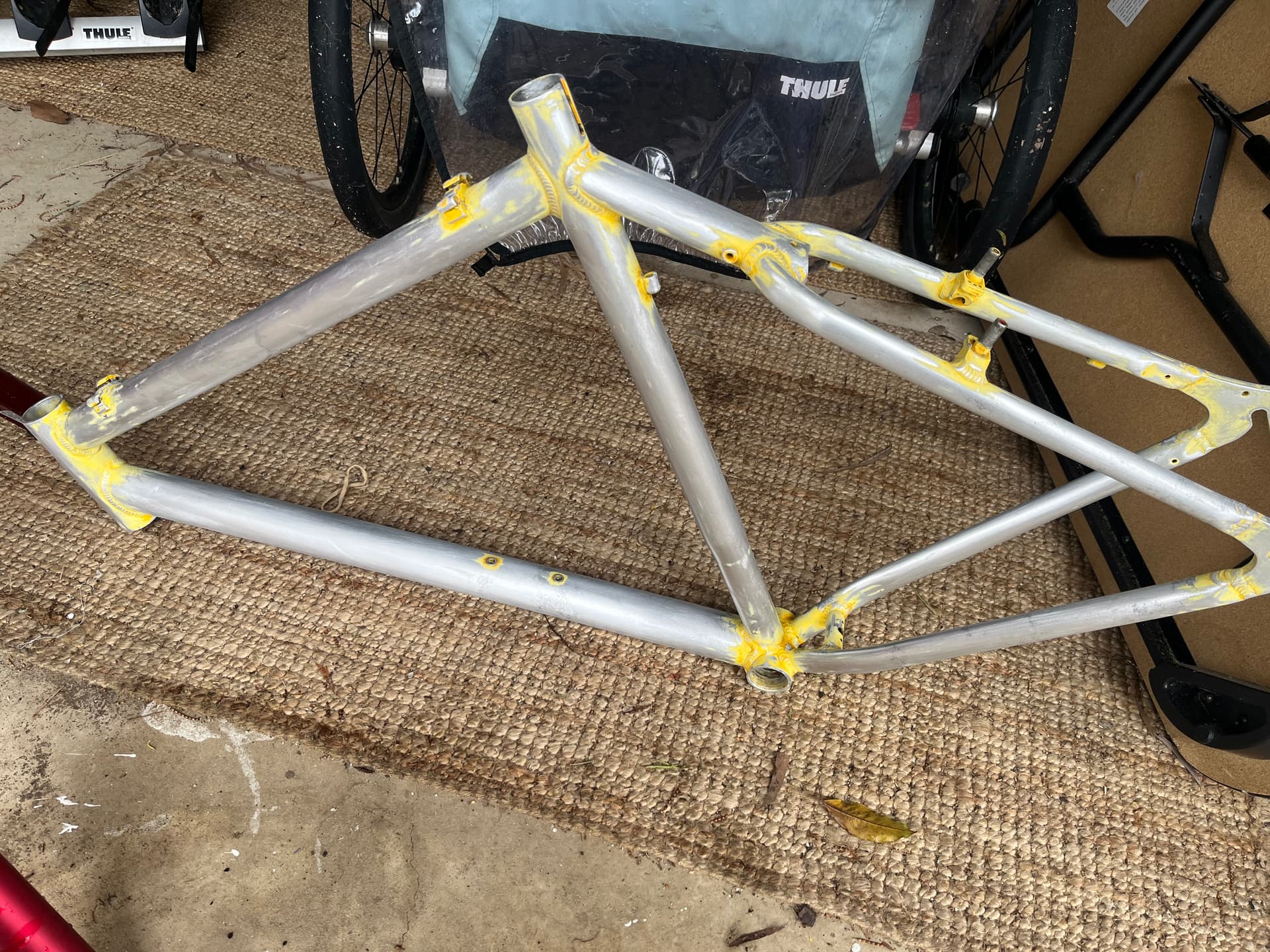
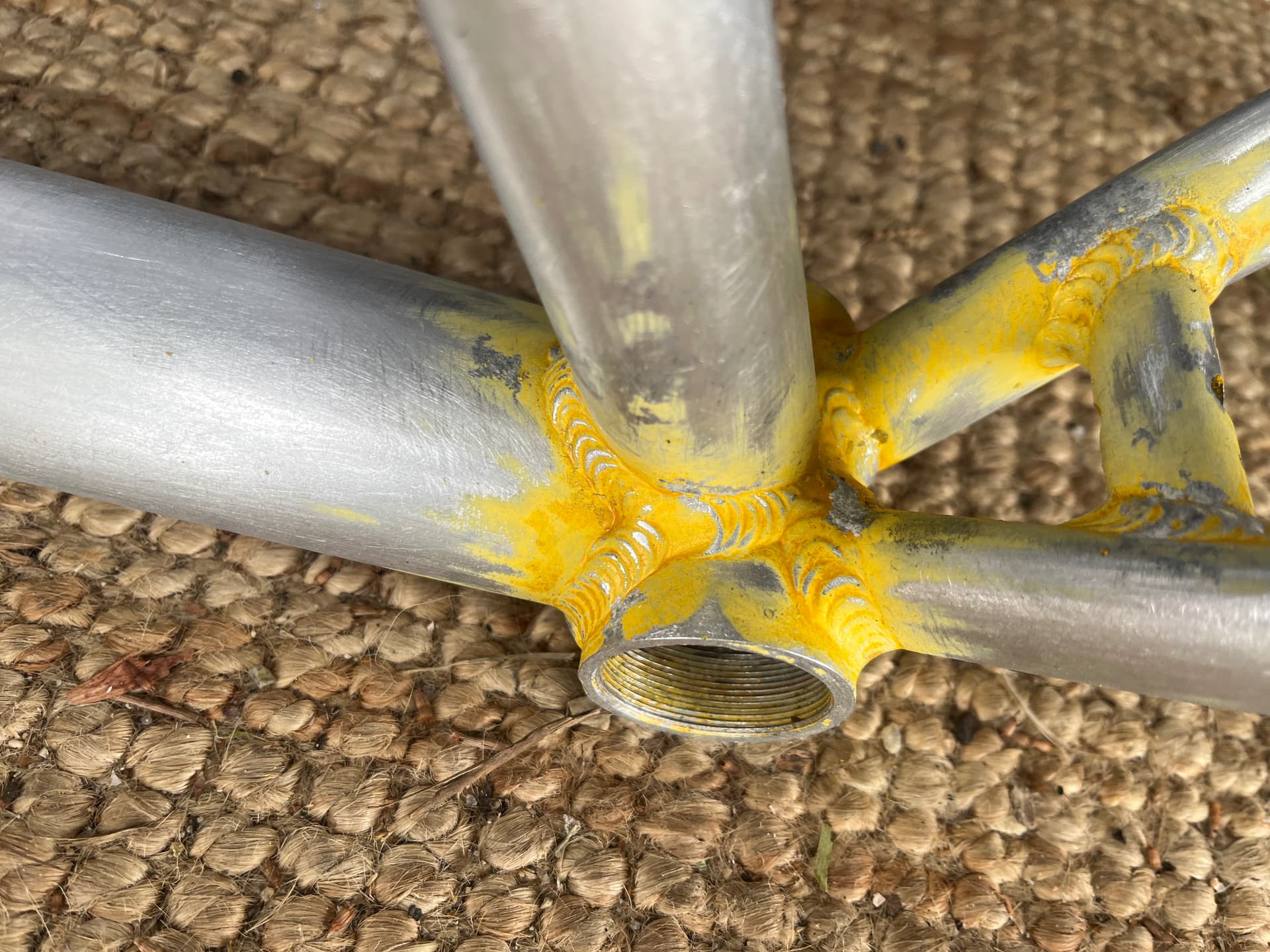
Any pro tips for getting into the tricky bits around joints, cage bolt holes, BB. etc?
I’m a complete amateur at this, and doing it for the first time. A few tries with the paint stripper, then sanded down the excess. But this is about as good as I can get it - without hours and hours of hard sanding. Welds are especially tricky!
Cheers
Yeah this bit sucks. I’ve put the stripper on at this point and scraped off as much as possible with a wood or plastic scraper.
I’ve also used a combo of a triangular oscillating sander and just more manual sanding.
What bike is it?
Hmmm yeah I worried someone might say that.
It’s a crusty old side of the road 26” giant MTB that my kids found. Decided to do it up as a project now they’ve lost interest so just me doing it haha